
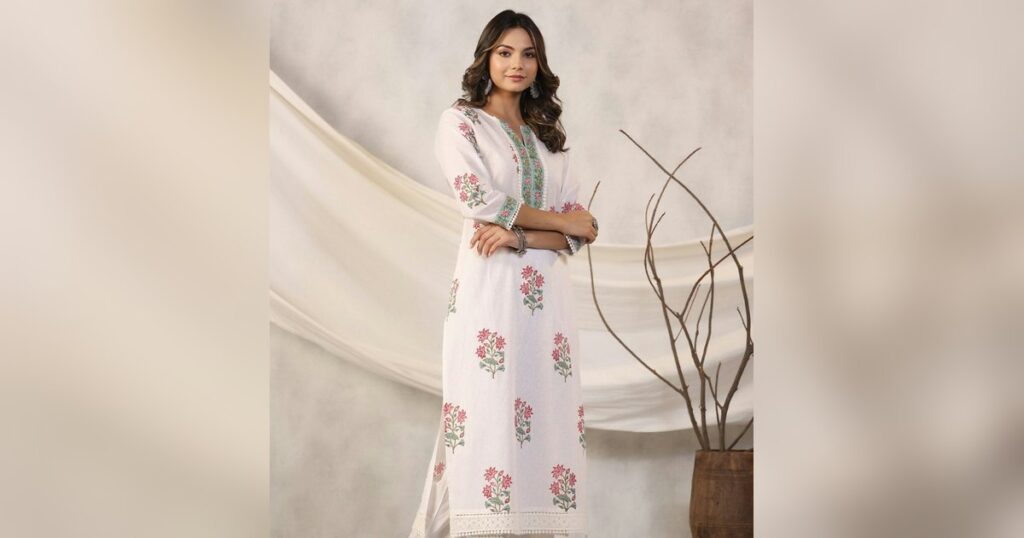
The white chikankari kurta has outlasted every trend in Indian fashion, and it does so by being almost aggressively plain. All the interest sits in texture rather than colour. This guide explains why white on white works so well, how to style it from a working morning to a wedding, and the practical business of keeping white genuinely white over several years.
Key Takeaways
- White on white works because the design reads through shadow and texture rather than contrast, which is why it never looks dated.
- It is the most versatile single garment in Indian ethnic wear. The same piece handles work, casual days, festivals and weddings.
- Whites go dull from storage and sunlight far more often than from wearing. How you store it matters more than how you wash it.
Why White On White Endures
Colour trends move quickly. Texture does not. Because a white chikankari kurta carries no colour statement at all, there is nothing in it to date, and a piece bought ten years ago looks exactly as current as one bought last week.
The effect depends on light rather than pigment. White thread on white cloth creates fine shadows, and those shadows shift as you move and as the light changes. That is why the garment photographs differently in daylight and lamplight, and why it looks richer in person than on a screen.
This is also why white shows stitch quality more honestly than any coloured version. There is no contrast to hide behind, so uneven work is immediately visible. A maker confident in their embroidery will show it in white.
Shadow work is the technique that makes the most of this. The thread is worked on the reverse of a sheer fabric so the motif shows through as a soft shadow from the front, producing depth without any raised surface. On fine cotton it is one of the most beautiful effects in Indian embroidery.
There is a cultural dimension too. White and cream carry associations of simplicity and refinement across much of India, which is part of why the chikankari range reads as quietly formal even when the silhouette is completely plain.
The craft itself is closely tied to Lucknow, where it developed under Mughal patronage and has been practised continuously ever since. White thread on fine white muslin was the original form, and much of what is sold today in colour is a modern extension of a tradition that began entirely without it.
That history is part of why the white version still feels like the reference point. Coloured chikan embroidery can be lovely, but it competes with the texture rather than revealing it. In white, the stitching is the entire design, which is a more demanding brief for the artisan and a more forgiving one for the wearer.
Styling It For Work And Casual Days
For an office, white chikankari sits in an unusually comfortable position. It reads deliberate and polished without reading festive, which very few embroidered garments manage.
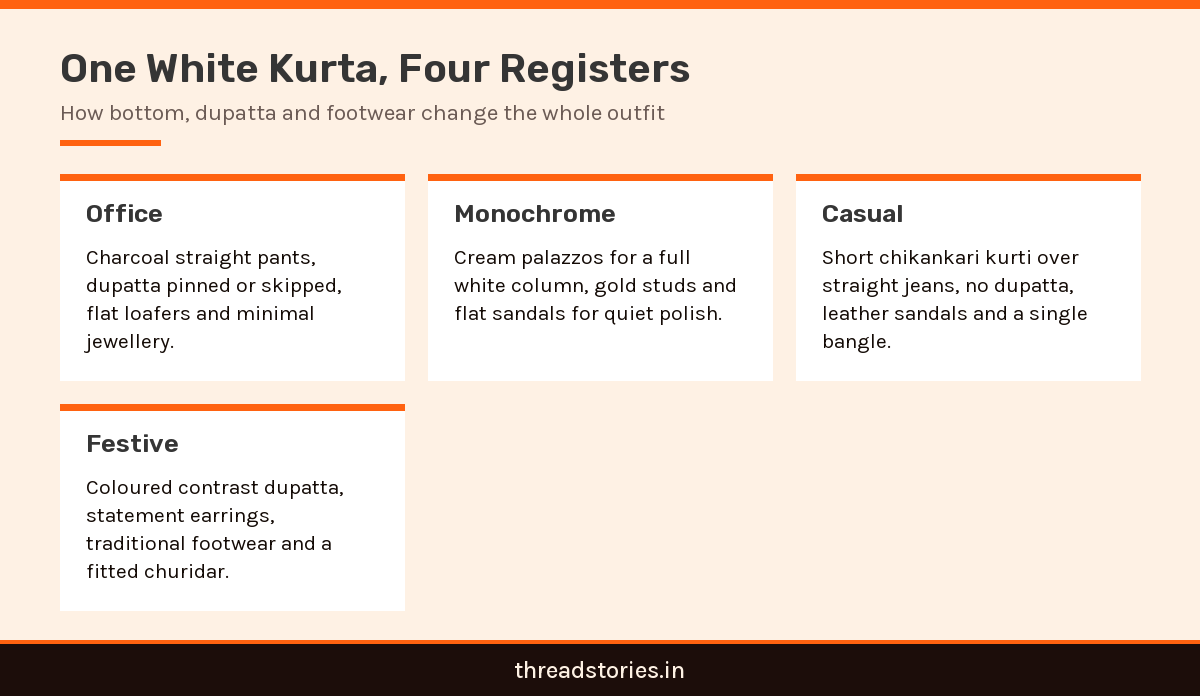
Keep the bottom neutral and matte. White or cream palazzos give a monochrome column that looks considered. Black or charcoal straight pants create contrast and read more corporate. Both work, and the choice mostly depends on how formal your workplace is.
Skip the dupatta on working days, or pin it flat at the shoulder. A loose dupatta over white is something you end up managing all day, and the kurta does not need it to look complete.
For casual wear, the same kurta pairs surprisingly well with denim. A short chikankari kurti over straight jeans is one of the easiest contemporary combinations in Indian dressing, and it works because the texture keeps it from looking plain.
Footwear decides the register more than anything else here. Flat leather sandals or loafers keep it firmly everyday, while embellished footwear pushes the same outfit towards occasion wear without changing a single garment.
Adding Colour Without Losing The Point
The fastest way to transform a white chikankari kurta is to put a single strong colour next to it, and the cheapest way to do that is with a dupatta you already own.
Deep jewel tones work best. Emerald, wine, indigo and mustard all sit well against white thread, and each one reads quite differently. A bright pink or orange reads festive and youthful, while a dark green or navy reads formal and restrained.
Keep the colour to one item. White chikankari with a coloured dupatta is elegant. White chikankari with a coloured dupatta, coloured bottom and coloured footwear becomes an outfit where the embroidery has stopped being the point.
Jewellery is the other lever. Gold and antique gold sit beautifully against white thread and read traditional. Oxidised silver reads contemporary and slightly more casual. Pearls read soft and formal. One choice, applied consistently, will do more than mixing all three.
For a fully coordinated festive look, matching chikankari palazzos in the same white keep the monochrome intact while adding texture below the waist, which photographs particularly well.
Keeping White Actually White
Most whites do not get stained. They get dull, and dullness comes from storage, sunlight and detergent residue rather than from any single accident.
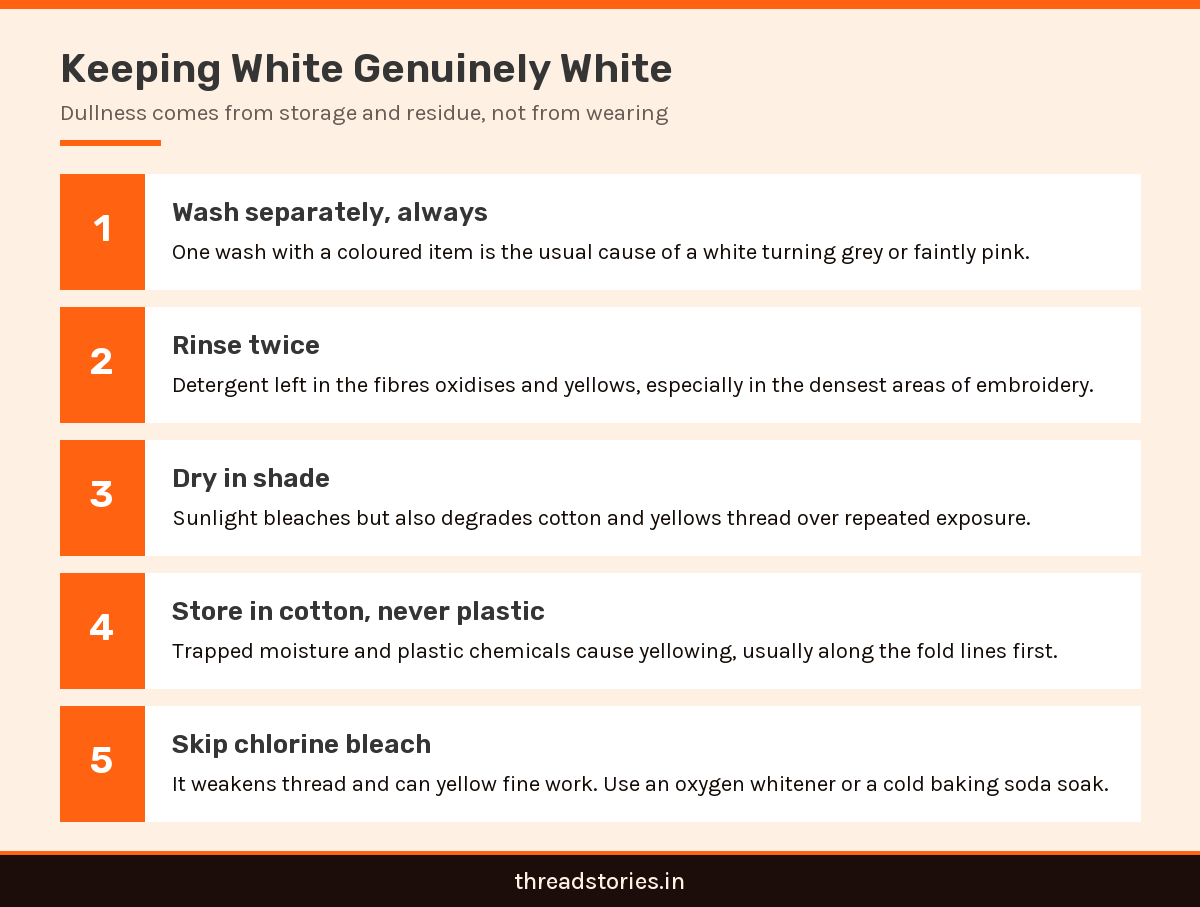
Wash separately, always, and in cold water with a mild liquid detergent. Coloured items release dye even after many washes, and a single wash with something new is the usual cause of a white turning grey or faintly pink.
Rinse thoroughly. Detergent left in the fibres oxidises over time and produces a yellow cast, particularly in thicker areas of embroidery. An extra rinse does more for a white garment than any whitening product.
Dry in shade rather than sun. This runs against instinct, because sunlight bleaches, but it also degrades cotton fibre and yellows the thread over repeated exposure. Shade drying keeps the white stable for far longer.
Never store in plastic. Trapped moisture and the chemicals in plastic covers both cause yellowing, and it usually appears along the fold lines first. A cotton pillowcase or a muslin bag protects from dust while letting the fabric breathe.
Avoid chlorine bleach entirely. It weakens cotton thread and can turn fine embroidery yellow rather than white. For a genuinely dull white, an oxygen based whitener or a long soak in cold water with a little baking soda is far safer and works well enough.
Choosing Your First White Piece
If you are buying one white chikankari kurta and want it to work everywhere, a few choices make that far more likely.
Choose fine cotton over georgette for a first piece. It breathes, it shows the stitch work clearly, and it is the version the craft was built around. Georgette is beautiful but more occasion specific and less comfortable in heat.
Choose a straight or gently A line silhouette at knee length. This is the shape that moves across work, casual and festive wear without argument. An anarkali in white is striking but far more limited in where it can go.
Choose moderate rather than dense work. A kurta covered entirely in embroidery is harder to wear to an office and harder to pair with anything else. Work concentrated at the yoke, the sleeves and the hem gives you more range.
Check that the garment is lined or plan to wear a slip. Fine white cotton is sheer in daylight, and this is the single most common complaint about otherwise excellent pieces.
Buy from somewhere that can tell you whether the work is hand done and where it came from. The team behind our collection source directly, which is the difference between a garment with a history and a product with a label.
Conclusion
A white chikankari kurta earns its reputation by doing more than any single garment reasonably should. Choose fine cotton in a straight silhouette with moderate work, keep the styling to one colour accent at a time, and treat storage as seriously as washing. Do that and the same piece will carry you from a working Tuesday to a wedding for years. Explore the ThreadStories chikankari collection to compare stitch quality and silhouettes before choosing your first.
Frequently Asked Questions
Why is white chikankari so popular?
Because the design reads through texture and shadow rather than colour, it never dates. The same piece stays current for years and suits almost every occasion.
What is shadow work in chikankari?
Thread is worked on the reverse of a sheer fabric so the motif shows through as a soft shadow from the front. It creates depth without any raised surface.
How do I stop my white kurta turning yellow?
Store it in cotton rather than plastic, rinse detergent out thoroughly, and dry in shade. Yellowing usually comes from storage and residue, not from wearing.
Can I bleach a white chikankari kurta?
Avoid chlorine bleach. It weakens cotton thread and can yellow fine embroidery. Use an oxygen based whitener or soak in cold water with baking soda.
Is a white chikankari kurta see through?
Fine cotton often is in daylight. Check whether the garment is lined, and if it is not, wear a cotton slip close to your skin tone underneath.
What colour dupatta goes with white chikankari?
Deep jewel tones work best. Emerald, wine, indigo and mustard all sit well against white thread. Keep the colour to one item rather than three.
Can I wear white chikankari to a wedding?
Yes, particularly for daytime functions. Add a strong contrast dupatta, statement jewellery and traditional footwear such as jhoothis to lift it.
Does white chikankari suit all skin tones?
Yes, though the undertone matters. Pure white reads crisp against deeper skin tones, while cream and ivory are softer against fairer ones.
Which silhouette should I buy first?
A straight or gently A line kurta at knee length. It moves between work, casual and festive wear more easily than an anarkali or a heavily flared shape.
Can white chikankari be worn in the monsoon?
It is the least practical season for white. Choose darker pieces during heavy rain, or keep to shorter hems from the ready to wear kurta range.