
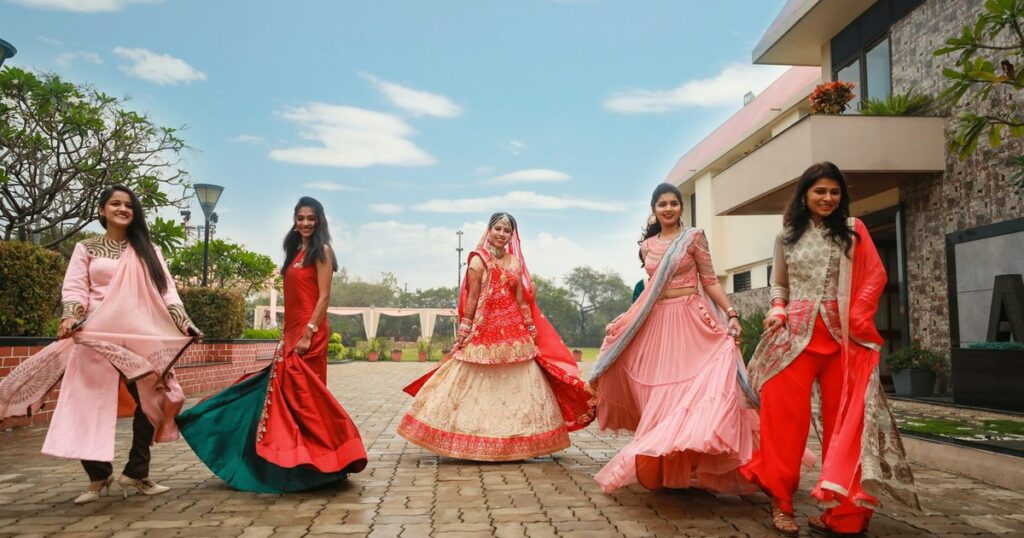
Most wardrobes fail on arithmetic rather than taste. There is plenty of ethnic wear for women in the cupboard and very little that works together, so the same three outfits get worn and everything else waits. This guide builds the problem backwards, starting from the year you actually live, and lands on twelve pieces that cover every season and almost every occasion.
Key Takeaways
- Build the wardrobe around occasions and seasons rather than around categories. Buying by category is what produces six similar kurtas and nothing for a wedding.
- Twelve well chosen pieces cover a year. Three bottoms, four tops, two drapes, two layers and one occasion outfit.
- Neutral bottoms and layers do the multiplying. Colour and detail belong on the pieces people actually look at.
Start With The Year, Not The Category
Write down what a normal twelve months contains before buying anything. For most women it is roughly two hundred working days, a handful of family functions, one or two weddings, a festival season and some travel.
That list immediately shows where the wardrobe should sit. The overwhelming majority of wear is ordinary, which means the majority of the budget belongs in pieces that survive repetition rather than pieces that make an impression once.
Most wardrobes are built the other way round. The occasion pieces are bought with care and the everyday pieces are bought quickly, which is exactly backwards given how the year actually distributes.
Climate is the second filter. Much of India has three practical seasons for dressing, a long hot one, a wet one and a short cool one, and a wardrobe built only for the hot months leaves you improvising for the other four.
The final filter is laundry. A piece that needs dry cleaning will be worn less than one that does not, whatever you intend when you buy it. Being honest about this at the point of purchase saves a great deal of shelf space.
It also helps to remember how broad the category actually is. Indian dress spans the draped sari and the stitched salwar kameez traditions, and most modern wardrobes borrow from both. Treating them as one pool rather than two separate collections is what allows twelve pieces to stretch as far as they do.
The Twelve Piece Framework
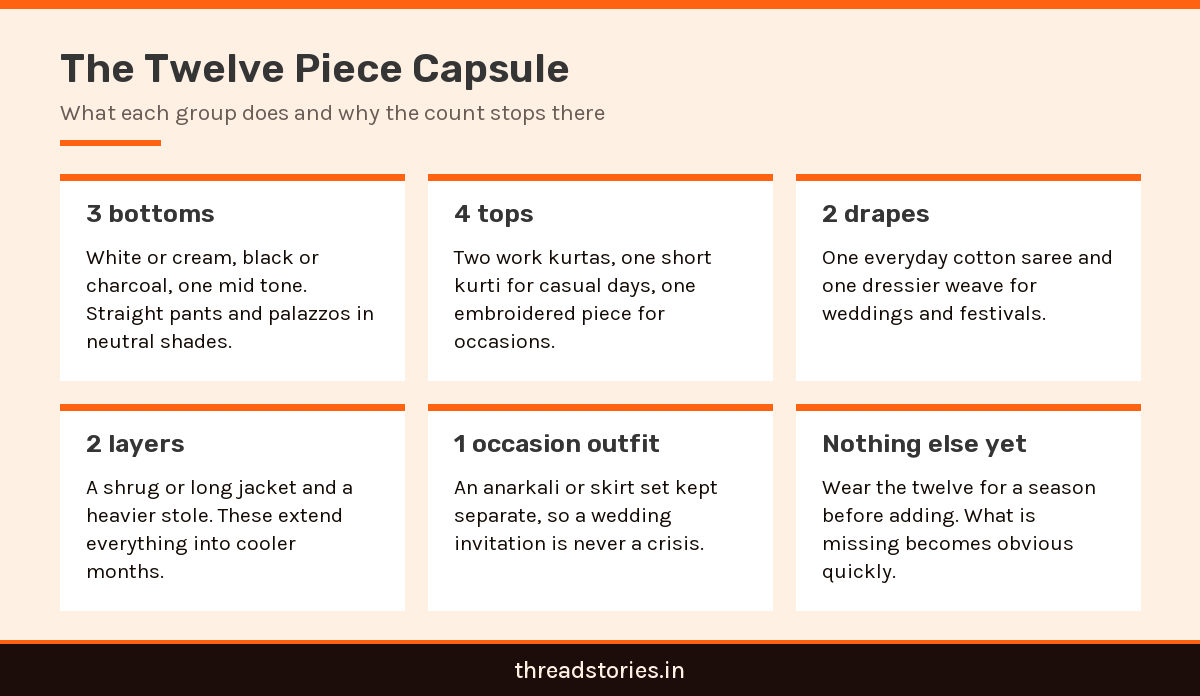
The structure is simple. Three bottoms, four tops, two drapes, two layering pieces and one occasion outfit. Everything in the first two groups is chosen to combine with everything else.
Three bottoms in neutral shades form the base. One white or cream, one black or charcoal, one mid tone. Straight pants and palazzos both work, and having one of each gives you two silhouettes from the same three items.
Four tops carry the colour and the detail. Two straight or A line kurtas for working days, one short kurti for casual wear, and one with real embroidery for occasions. This is where the money is best spent, because these are the pieces people actually look at.
Two drapes cover the situations a kurta cannot. One everyday cotton saree for functions and family events, and one dressier weave for weddings and festivals. Browsing the saree collection by weave rather than by colour makes this choice much faster.
Two layering pieces extend everything into cooler months. A shrug or long jacket and a heavier dupatta or stole will change the look of every top underneath them, which is why layers are better value than additional kurtas.
The twelfth piece is one proper occasion outfit, kept deliberately separate. An anarkali or a skirt set that you genuinely like removes the annual panic before a wedding invitation.
Dressing Through The Seasons
The same twelve pieces behave differently across the year, and planning for that is what stops the wardrobe stalling in October.
Through the hot months, the lightest cottons carry almost everything. Short sleeves, no layering, minimal jewellery and the most breathable drapes you own. This is when a fine cotton saree or a light kurta genuinely outperforms anything synthetic.
In the monsoon, fabric choice matters more than style. Darker mid tones hide splashes, shorter hems stay clean, and quick drying cottons beat anything that holds water. This is the season to leave pale cream and floor length pieces alone.
Through the cool months, layering does the work. The same kurtas continue with a shrug or jacket over them, full sleeves replace short ones, and a heavier stole replaces a light dupatta. Nothing new is needed if the layers were chosen in neutrals.
Festival season sits across these and asks for something different again. This is where the embroidered top and the dressier drape earn their place, lifted with jewellery and traditional footwear rather than with additional clothing.
Travel deserves its own note, because it cuts across all four seasons. Pack the layering pieces and the neutral bottoms first, then one top per day plus one spare. Ethnic wear travels better than most people assume, provided you roll rather than fold and leave the occasion outfit at home unless the trip specifically calls for it.
Making The Pieces Work Harder
A capsule only works if the pieces genuinely combine, and a few habits decide whether they do.
Keep a single colour logic. Choose either warm tones or cool tones as the backbone and let the exceptions be deliberate. A wardrobe containing both rust and fuchsia will always have pieces that refuse to pair.
Buy bottoms and layers in neutrals without exception. Every time a bottom has a strong print or colour, it becomes compatible with fewer tops, and the multiplication that makes a capsule work quietly disappears.
Use accessories rather than clothing to change register. One pair of everyday earrings, one statement pair, one pair of flats and one pair of traditional shoes such as jhoothis will take the same twelve pieces from a working morning to a festive evening.
Separate sets that were sold together. A kurta bought as part of a set will often look better with a different bottom from your own wardrobe, and treating the pieces independently roughly doubles what the set can do.
Review once a season rather than continuously. If something has not been worn in three months, identify whether the problem is fit, fabric weight or colour compatibility, and use that answer on the next purchase rather than buying something similar again.

Where To Spend And Where To Save
Budget allocation decides whether a capsule feels considered or thin, and the split is not intuitive.
Spend on the pieces worn most. The two working kurtas and the everyday saree will each be worn dozens of times a year, so fabric quality and fit pay back many times over. A well made everyday piece is the best value item in any wardrobe.
Spend on layers as well. A good shrug or jacket is worn over everything, which means it is seen constantly and takes the most wear. This is the item people most often buy cheaply and most often regret.
Save on bottoms. Plain neutral palazzos and straight pants do not need to be expensive, because they are supporting pieces that nobody examines closely. Buy them well made rather than elaborate.
Be honest about the occasion outfit. It will be worn a few times a year, so buying the most expensive option available rarely makes sense. Buy one you genuinely like at a price that does not make you anxious about wearing it twice.
If you are starting from scratch and unsure where to begin, a curated boutique is easier to build from than a marketplace, because the range is already filtered and the pieces tend to share a colour sensibility.
Conclusion
Good ethnic wear for women is a planning problem more than a shopping problem. Start from the year you actually live, build around three neutral bottoms and four tops that carry the colour, add two drapes and two layers, and keep one occasion outfit ready. Spend on what gets worn weekly and save on what supports it. Explore the ThreadStories collection to build the first few pieces, and write to us if you would like help planning the rest.
Frequently Asked Questions
How many ethnic outfits does a woman actually need?
Twelve pieces covers a full year comfortably. Three neutral bottoms, four tops, two drapes, two layering pieces and one occasion outfit, all chosen to combine freely.
What should I buy first when starting a wardrobe?
Three neutral bottoms and two straight kurtas. That combination immediately gives you six working outfits and forms the base everything else is added to.
Why do I own so much and wear so little?
Usually because pieces were bought by category rather than by occasion. Six similar kurtas and no layering produces a full cupboard and very few complete outfits.
Should bottoms be plain or printed?
Plain, almost always. Every printed bottom pairs with fewer tops, which reduces the number of combinations and quietly undoes the point of a capsule wardrobe.
How do I dress ethnic wear for winter in India?
Layer rather than replace. A shrug or long jacket over existing kurtas, full sleeves instead of short, and a heavier stole in place of a light dupatta.
What is the best fabric for everyday ethnic wear?
Mid weight cotton. It breathes through hot months, washes at home without fuss, and holds shape through a working day better than very light or very heavy options.
Where should I spend the most money?
On the pieces worn weekly, meaning your working kurtas, your everyday saree and your layering jacket. These are seen most and take the most wear.
Can I wear a saree to the office?
Yes, and a mid weight cotton or linen handles it well. Keep the border restrained and the blouse simple. Our blouse styling guide covers neckline choices for work.
How often should I review my wardrobe?
Once a season. Identify anything unworn for three months and work out whether the problem is fit, fabric weight or colour, then apply that to your next purchase.
Do I need matching dupattas for every outfit?
No. Two dupattas, one neutral and one with colour or work, will cover most combinations. A deliberate contrast usually looks better than the matching one supplied.