
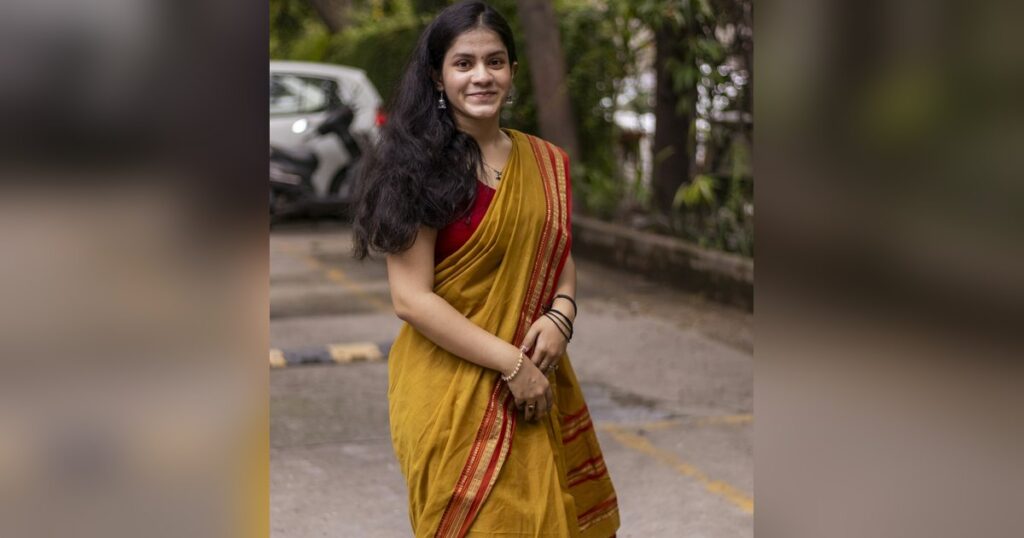
A pure cotton saree is the one that gets worn without ceremony. No dry cleaner, no nervous inspection, no waiting for the right occasion. It goes on for work, for errands, for temple visits and for ordinary Tuesdays. This guide covers what pure cotton actually means on a label, how to judge quality by weight and yarn, and how to wash it so the cloth softens rather than thins.
Key Takeaways
- Pure cotton simply means no synthetic blended into the yarn. It says nothing about whether the cloth was hand woven or mill made.
- Weight decides everyday comfort more than colour or print. A mid weight handloom is the most forgiving choice for daily wear.
- Cotton improves with washing when the washing is gentle. The first three washes matter more than the next thirty.
What Pure Cotton Actually Means
The phrase describes fibre content and nothing else. A pure cotton saree contains no polyester, viscose or other synthetic in the yarn. It does not tell you whether the cloth came off a handloom in a weaving village or off a power loom in a mill, and those two produce very different results.
This matters because the two age differently. Mill woven cotton is perfectly even and starts comfortable, then gradually thins with washing. Hand woven cotton starts slightly uneven and stiff, then softens and keeps its body for years. The second is what people mean when they talk about a saree getting better with age.
Blends are not a failure, and it is worth saying so plainly. A cotton polyester blend resists creasing and dries fast, which suits some lives very well. The reason to choose pure cotton is comfort against the skin in heat, and that is a real advantage rather than a matter of principle.
Where the label becomes misleading is when pure cotton is used to imply handmade. If a listing does not name a weave, a region or a weaving technique, assume it is mill produced. Our everyday pure cotton edit names the origin on each piece for exactly this reason.
One more distinction is useful. Khadi is hand spun as well as hand woven, which makes it a subset of handloom rather than a synonym for it. Khadi has a distinctive uneven texture and takes longer to soften, but it is unusually durable once it does.
Judging Weight And Yarn Before You Buy
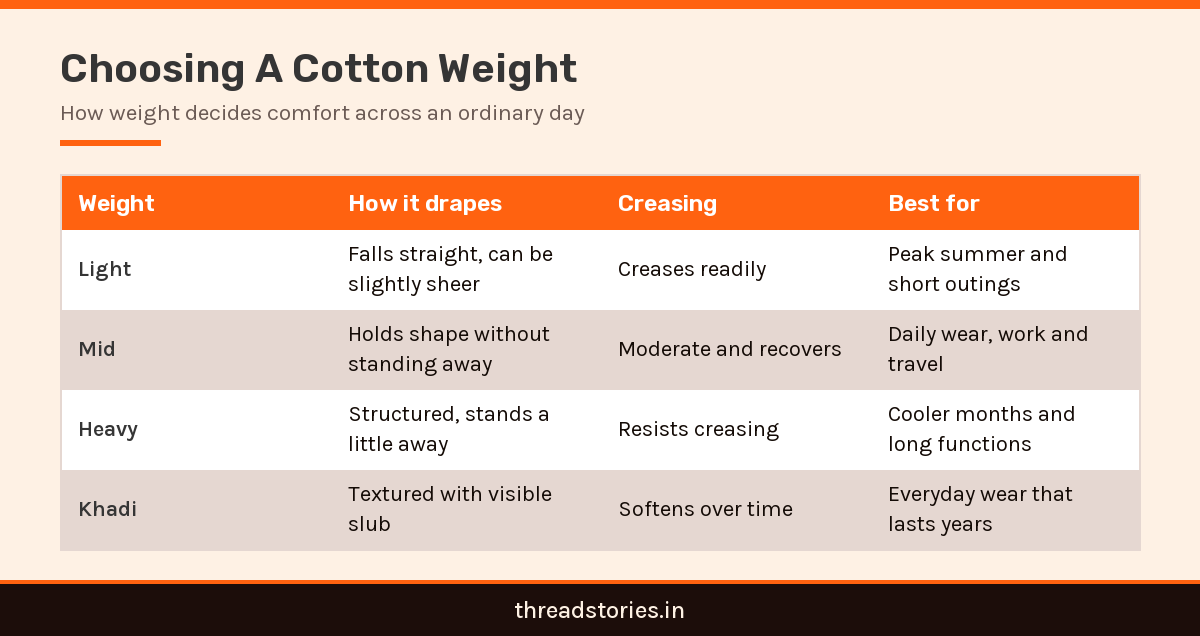
Weight is the single most useful thing to assess, and it is easier to judge than people expect. Let a corner of the cloth hang from your fingers. If it falls straight down in a narrow column it will drape close to the body. If it holds outward it will stand away and read more structured.
For daily wear, mid weight is the target. Very light cotton creases constantly and needs a petticoat matched carefully to avoid transparency. Very heavy cotton is warm and tiring to wear through a full day. The middle range handles both problems.
Yarn count tells you about fineness rather than quality. A higher count means finer thread and a smoother, lighter cloth. A lower count means a sturdier, more textured one. Neither is better in isolation, but a high count cotton needs gentler handling than a low count one.
Check the weave density by holding the saree to light. You want to see structure rather than gaps. A loose weave in a heavier yarn usually means the cloth was made quickly, and it will lose shape at the pleats within a season of regular wear.
Finally, look at the border join from the inside. A woven border is continuous with the body. A stitched border has a ridge you can feel, and that ridge is where the saree will eventually fray. On a drape you plan to wear weekly, this detail matters more than the print on the front.
Prints, Borders And Daily Practicality
Print does more practical work than most buyers realise. A patterned ground hides creasing, small stains and the general wear of a day out. A plain pale cotton shows everything, which is why it looks best in photographs and worst by five in the afternoon.
Block prints are particularly well suited to daily wear. The slight irregularity of hand block printing disguises marks, and the technique sits naturally on cotton. Tie dye does the same job with even more forgiveness.
Borders decide how formal the same base cloth reads. A plain selvedge keeps it firmly everyday. A contrast woven border lifts it enough for an office. A zari border pushes it towards festive, which is more than most daily sarees need to do.
Colour follows the same practical logic. Mid tones hide the most, very pale shades show every mark, and very dark shades show lint and dust. Olive, indigo, rust, mustard and grey are the workhorses of most cotton wardrobes for this reason.
If you want a single recommendation for someone starting out, choose a mid weight block printed cotton in a mid tone with a simple woven border. It will go almost anywhere and forgive almost everything.
The Washing Routine That Softens Cotton
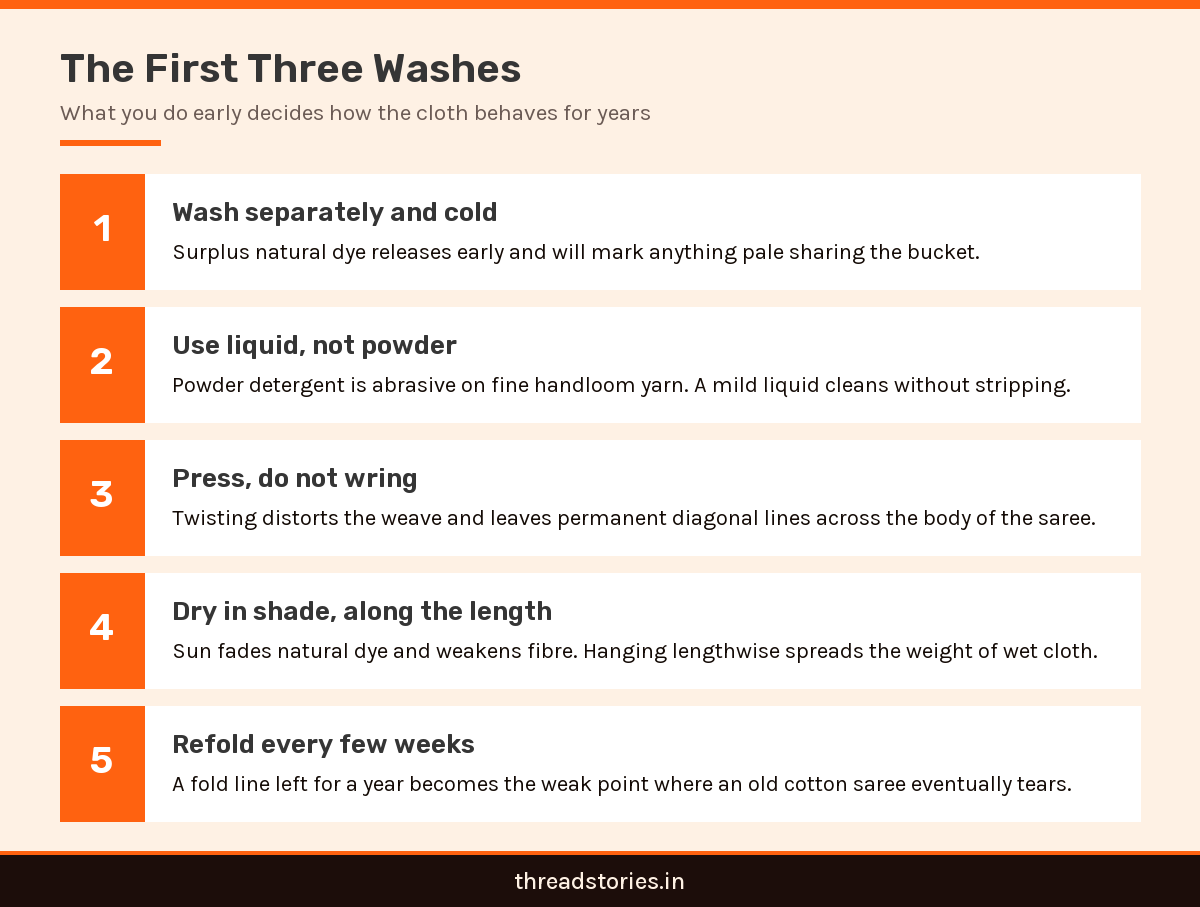
The first three washes decide how a cotton saree behaves for the rest of its life, so it is worth taking them seriously even if you are relaxed afterwards.
Wash separately in cold water with a mild liquid detergent. Natural dyes release surplus colour early and will mark anything pale sharing the bucket. Powder detergents can be abrasive on fine yarn, which is why liquid is the better choice for handloom.
Never wring a cotton saree. Press the water out between your palms or against the side of the bucket. Twisting distorts the weave and creates permanent diagonal lines that no amount of ironing will remove.
Dry in shade, hung along the length rather than folded over a line. Direct sun fades natural dye quickly and makes cotton brittle within a season. Hanging along the length spreads the weight so no single point takes the strain of a wet saree.
Iron while slightly damp on a medium setting, working along the grain. For storage, refold along a different line every month or two. A fold left untouched for a year becomes a weak point, and that is where older cotton sarees tear first.
How Many You Actually Need
A daily cotton wardrobe is smaller than most people assume. Four to six drapes in genuine rotation will outperform twelve bought without a plan, because the ones you own get worn often enough to soften properly.
Start with two in mid tones that go with every blouse you own. These are the sarees you reach for without thinking, and they should be the least precious things in the cupboard.
Add two with print or texture for days that involve travel, food or children. The pattern does the forgiving, and you will wear them more freely because you are not protecting them.
The fifth and sixth are where personality goes. A colour you genuinely like, or a weave with more character such as a hand woven handloom piece, gives the rotation somewhere to go on better days.
Wear them rather than saving them. Cotton improves through use, and a saree kept for good occasions never reaches the softness that makes it a favourite. If you want to see how the weights compare in person, browse the cotton saree edit by weave rather than by colour.
Conclusion
A pure cotton saree earns its place by being easy. Judge it by weight and weave rather than by the word on the label, choose mid tones with print or texture for daily wear, take the first three washes seriously, and refold it often. Do that and the cloth softens into the drape you reach for without deciding. Explore the everyday handloom range to compare weights side by side, and write to us if you would like help choosing your first few.
Frequently Asked Questions
What does pure cotton mean on a saree label?
It means the yarn contains no synthetic fibre. It does not indicate whether the cloth was hand woven or mill made, which is a separate and equally important question.
Which cotton saree weight is best for daily wear?
Mid weight. Light cotton creases constantly and can be sheer, while heavy cotton is warm over a full day. The middle range solves both problems comfortably.
Do pure cotton sarees need starching?
Only if you want crisper pleats. A weak rice starch adds body without stiffening the yarn. Heavy commercial starch makes cotton brittle over repeated use.
How do I stop my cotton saree from fading?
Dry in shade rather than direct sun and wash in cold water. Sunlight is the main cause of fading on naturally dyed handloom, far more than detergent is.
Is khadi the same as handloom cotton?
Not quite. Khadi is hand spun as well as hand woven, making it a subset of handloom. It has a more textured surface and takes longer to soften.
Can I machine wash a pure cotton saree?
Mill woven cotton usually tolerates a gentle cycle. Hand woven pieces should be washed by hand, because machine agitation stresses an uneven weave unevenly.
Which colours work best for everyday cotton sarees?
Mid tones such as olive, indigo, rust and mustard. They hide creasing and minor marks, and pair easily with the neutral blouses most wardrobes already contain.
Why does my cotton saree feel rough when new?
New handloom carries sizing from the weaving process. It washes out over the first few washes, and the cloth reaches its real softness after that.
How many cotton sarees should I own?
Four to six in genuine rotation. Two neutrals, two printed or textured for messier days, and one or two with more character for better occasions.
What blouse suits a printed cotton saree?
A plain blouse in a colour drawn from the print works best. Browse Madurai sungudi and printed options to see how print and blouse colour interact.