

Linen cotton sarees have quietly taken over the part of the wardrobe that plain cotton used to own, and the reason is the working day. They hold a sharp pleat through hours of sitting, they stay cool in an air conditioned office, and they crease in a way that reads as deliberate. This guide explains how linen behaves, how cotton silk compares, and how to build a working week around both.
Key Takeaways
- Linen holds structure and stays cool, which is why it survives a desk day better than softer cottons do.
- Cotton silk offers a middle path. It adds a faint sheen and extra drape while keeping most of the comfort of cotton.
- Linen creases and always will. Choosing textured weaves and mid tones makes that creasing almost invisible.
Why Linen Works So Well At A Desk
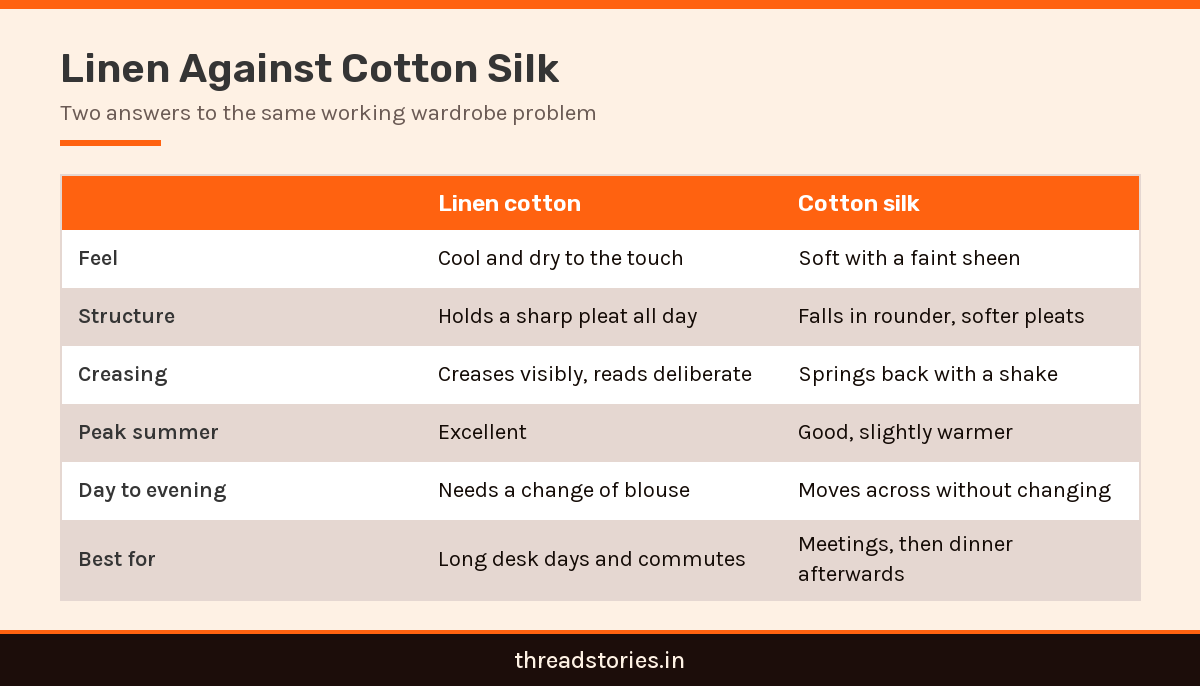
Linen is spun from flax rather than cotton, and the fibre is both stronger and more conductive of heat. That combination produces a cloth which feels cool to the touch and moves heat away from the body faster than cotton of the same weight. In a warm office it makes a real difference by the middle of the afternoon.
The second advantage is structure. Linen has a natural stiffness that holds a pleat sharply, which is exactly what a saree needs when you are sitting, standing and moving between meetings. Softer cottons collapse into the body over a few hours. Linen keeps its line.
It also resists looking tired. A drape that has been sat in all day still reads as intentional in linen, partly because the fabric has body and partly because we already associate a linen crease with something well made rather than something neglected.
Durability is the quiet third reason. Flax fibre is longer and stronger than cotton fibre, so a linen blend tolerates frequent washing better than fine cotton does. For a saree that goes into rotation two or three times a month, that resilience adds up quickly over a couple of years.
The linen threaded drapes in our range are chosen with exactly this use in mind, which is why they lean towards mid weights and colours that work under office lighting rather than only in daylight.
How Cotton Silk Compares
Cotton silk is a different answer to a similar problem. The warp is usually cotton and the weft silk, or the two are blended in the yarn itself, and the result carries a faint sheen that plain cotton does not have.
Where linen is cool and structured, cotton silk is soft and fluid. It drapes closer to the body, falls in rounder pleats and catches light along the folds. That makes it the better pick when you want a saree to move from a working afternoon into an evening without changing.
It is also more forgiving on creasing. The silk content springs back in a way that flax does not, so a cotton silk saree that has been folded across a chair recovers with a shake rather than needing an iron.
The trade off is heat. Silk traps warmth more than flax, so in genuine peak summer a cotton silk drape will feel warmer than a linen one of the same weight. For most of the year that difference is small, and for air conditioned offices it is irrelevant.
Our cotton silk blends sit deliberately in that middle ground, which makes them the easiest single category to recommend to someone buying their first working saree.
Colours That Survive A Working Week
Colour choice matters more in a working wardrobe than anywhere else, because these sarees are seen by the same people repeatedly. The aim is a small set that does not read as a uniform.
Mid tones do the heaviest lifting. Olive, rust, indigo, slate and mustard all hide minor creasing, photograph reasonably under office lighting and pair with almost any blouse you already own. Very pale shades show every crease and every coffee incident, and very dark shades show lint.
Texture helps as much as colour. A subtle stripe, a fine check or a slub in the yarn breaks up the surface so creases disappear into the pattern. This is the single most useful trick for anyone who finds linen high maintenance.
Borders should be restrained for office use. A fine contrast line or a narrow woven edge reads professional, while a broad zari border pushes the same saree towards festive and makes it harder to repeat within a month.
Build the set around blouses rather than sarees. Two neutral blouses, one cream and one black, will carry five or six working drapes. The ready to wear blouse range covers standard sizes if you would rather not wait on a tailor for every piece.
Handling Creasing Without Constant Ironing
Linen creases. That is chemistry rather than a fault in the cloth, and fighting it completely is a losing strategy. The realistic goal is to manage where the creases fall.
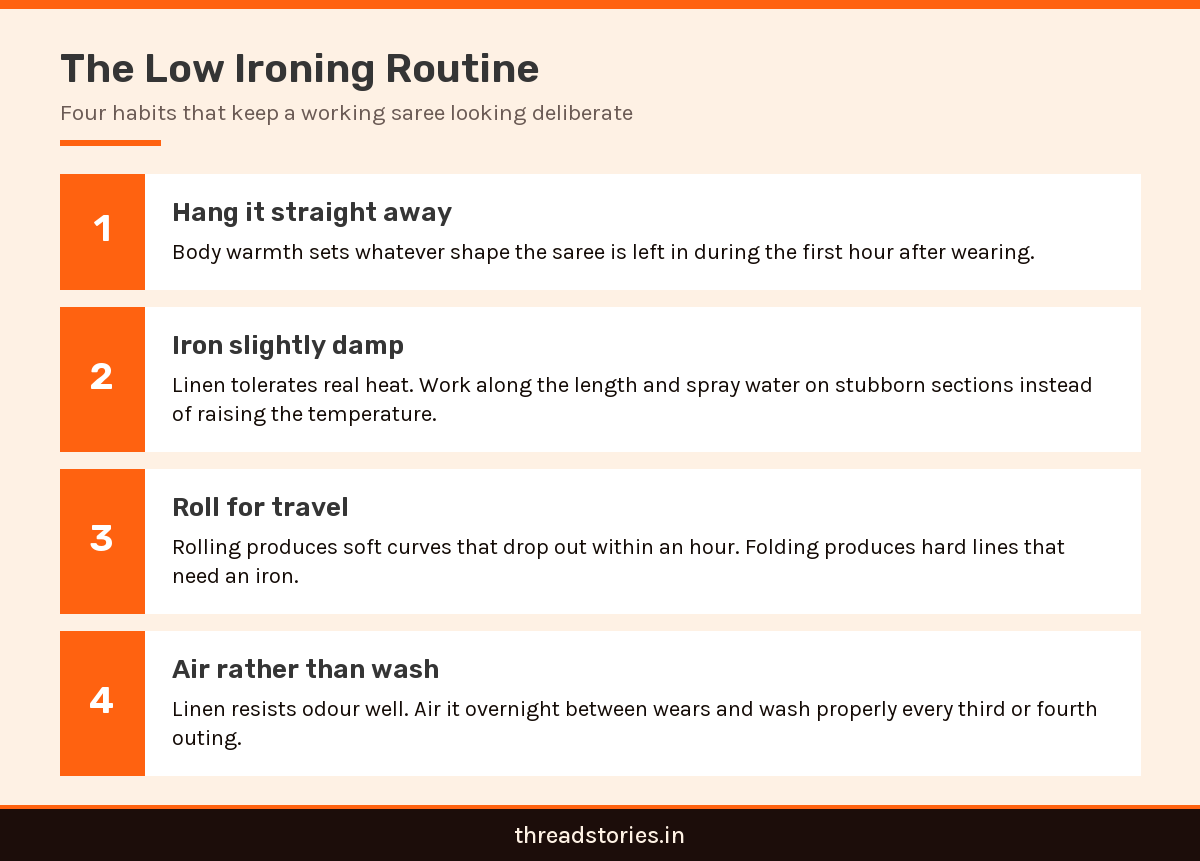
Hang the saree immediately after wearing rather than folding it into a pile. Most of the damage happens in the hour after it comes off, when body warmth sets whatever shape it was left in. A simple wooden hanger and ten seconds of attention removes the need for an iron next time.
Iron while slightly damp, on a medium to high setting, working along the length. Linen tolerates more heat than fine cotton, so this is one fabric where a confident iron genuinely helps. A light spray of water on stubborn sections works better than increasing the temperature.
For travel, roll rather than fold. A rolled saree arrives with soft curves instead of hard lines, and those curves fall out within an hour of wearing. This one habit is why experienced saree wearers travel with linen rather than avoiding it.
Wash less often than instinct suggests. Linen does not hold odour the way synthetics do, and every wash loosens the finish slightly. Airing overnight is usually enough between wears, with a proper wash every third or fourth outing.
Building A Five Saree Working Rotation
A working rotation does not need to be large. Five well chosen drapes will cover a month without anyone noticing a repeat, provided the blouses do some of the work.
Start with two linen pieces in mid tones, ideally with some texture in the weave. These are the ones for long days, travel days and anything involving a commute in heat. They should be the least precious sarees you own.
Add two cotton silk drapes for days with meetings or anything that continues into an evening. The sheen does the work of dressing the outfit up, so you do not need to change anything but the jewellery.
The fifth should be a slightly better piece for presentations, client days or an office function, ideally with a woven border. This is where a cotton chanderi drape earns its place, adding a little more polish without moving into festive territory.
Rotate deliberately rather than reaching for the same favourite. Even wear keeps all five ageing at a similar rate, which matters with linen because the fabric visibly softens over the first year. If you want to compare weights before committing, the full saree collection is organised by weave rather than by colour.
Keep the accessories fixed and let the saree change. One pair of everyday earrings, one watch and one comfortable pair of flats will carry the whole rotation, which removes a decision from every morning. The women who wear sarees to work most consistently are almost always the ones who have stopped deciding anything beyond which drape to pick up.
Conclusion
Linen cotton sarees earn their place through a specific kind of reliability. They stay cool, they hold a pleat and they still look intentional at six in the evening. Pair them with cotton silk for days that run late, choose mid tones with texture to hide creasing, hang rather than fold, and keep the rotation small enough to actually wear. Browse the everyday cotton edit to see how these weights compare before you build your own working set.
Frequently Asked Questions
Are linen cotton sarees good for office wear?
Yes, they are among the best options. Linen stays cool, holds a sharp pleat through a full day of sitting, and still looks deliberate by evening.
Do linen sarees crease a lot?
Yes, and that is inherent to flax fibre. Choosing textured weaves and mid tones makes creasing far less visible, and hanging the saree immediately after wearing helps most.
What is the difference between linen and cotton silk?
Linen is cool and structured with sharp pleats. Cotton silk is softer, has a faint sheen and drapes closer to the body. Linen suits heat, cotton silk suits evenings.
How often should I wash a linen saree?
Every third or fourth wearing is usually enough. Linen resists odour well, and frequent washing loosens the finish. Airing overnight between wears works for most days.
Can I iron linen sarees on high heat?
Yes, linen tolerates more heat than fine cotton. Iron while slightly damp and work along the length. Spray water on stubborn creases rather than raising the temperature.
Which colours are best for a working saree?
Mid tones such as olive, rust, indigo and slate. They hide creasing, sit well under office lighting and pair with neutral blouses you already own.
Are linen sarees suitable for weddings?
For daytime office functions, yes. For weddings choose something with more presence, such as a kota doria or jamdani weave with a woven border.
How many working sarees do I need?
Five covers a month comfortably. Two linen for long days, two cotton silk for meetings and evenings, and one slightly better piece for presentations or office events.
Does linen soften over time?
Yes, noticeably. Flax starts firm and relaxes with each wash. Most linen sarees reach their best drape somewhere in the first year of regular wearing.
How should I pack a linen saree for travel?
Roll it rather than folding. Rolling creates soft curves that fall out within an hour of wearing, while folding sets hard lines that need an iron.