

A kota doria saree is the drape most women reach for when the event is in daylight and the weather is not being kind. It is light enough to survive a long afternoon and structured enough to hold a pleat, which is a rare combination in cotton. This guide covers how the weave is made, what the square check actually is, how to recognise a genuine piece and which occasions it handles best.
Key Takeaways
- The fine square check is called khat, created by alternating cotton and silk yarn in both directions during weaving.
- Kota doria sits between mul and a standard cotton. It is airy and slightly sheer, yet it holds a pleat far better than mul does.
- It is a daytime weave. In daylight the transparency reads as elegant, and under harsh evening lighting it reads as thin.
How The Kota Weave Is Made
The defining feature is the khat, a fine square formed where groups of cotton and silk yarn cross. Weavers alternate the two fibres in both the warp and the weft, and because cotton and silk react differently to washing and starching, the squares tighten slightly and become visible as a delicate grid.
That mixed fibre construction is what gives the cloth its unusual character. The silk supplies strength and a faint sheen, while the cotton supplies breathability and softness. Neither fibre alone would produce the same result, and the balance between them is what separates a good kota doria piece from a flat imitation.
The weave originates in Kota in Rajasthan, and the craft carries a geographical indication that ties the name to the region. The Kota Doria tradition developed in a dry, hot climate where open cloth was a practical answer to the weather rather than a design decision.
Weaving it is slow work. The yarn is fine and breaks easily under tension, so a weaver moves carefully and a single saree can take several days on the loom. That time is the reason a genuine hand woven kota costs what it does, and the reason machine made versions exist in the first place.
The weaving is traditionally done on pit looms, with the weaver seated and the loom set into the floor. That arrangement keeps the fine yarn at an even tension and lets the weaver feel the cloth forming, which matters when a single broken thread can mark the whole piece. Families in the weaving villages around Kota have worked this way for generations, and the skill is passed down rather than taught formally.
Yarn preparation is a job in itself. The cotton and silk are wound separately, sized to strengthen them against friction, and then arranged in the precise groups that produce the square. Get the grouping wrong and the khat loses its regularity, which is why the setup stage takes longer than many people assume for a cloth that looks this simple.
Telling A Genuine Kota From A Copy
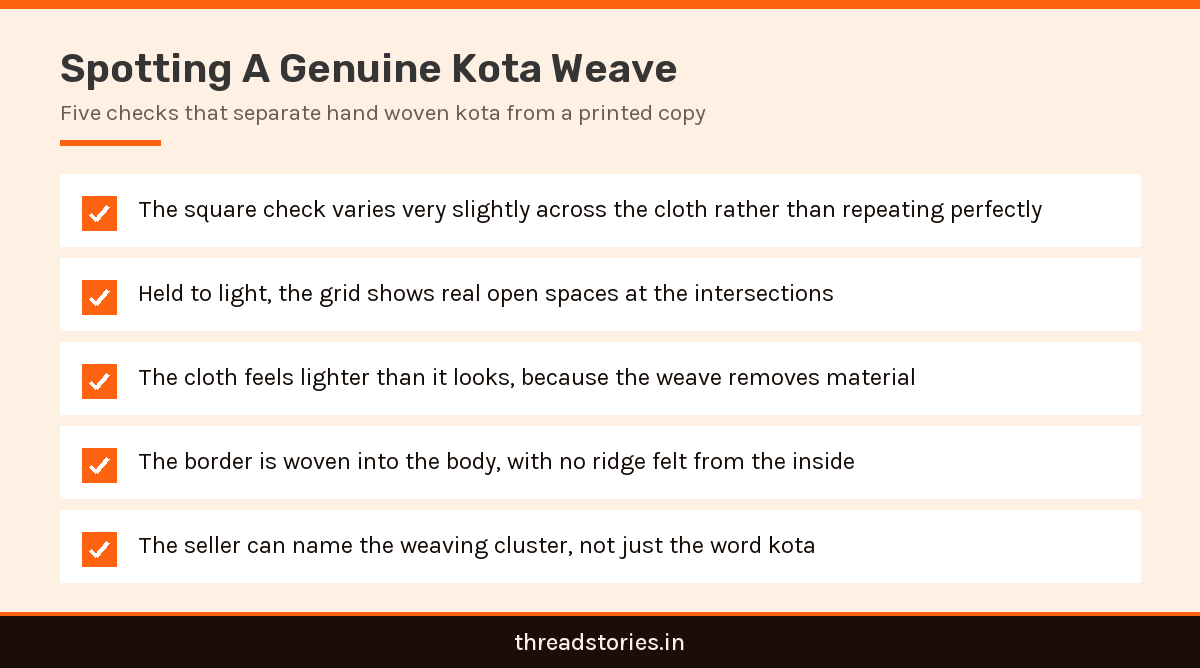
Start with the square itself. On a hand woven kota the khat varies very slightly across the cloth, because a human being set the tension. On a power loom copy every square is identical, which looks cleaner and is the clearest sign that no hand was involved.
Hold the saree to the light. Genuine kota shows a visible grid with tiny open spaces at the intersections. A printed imitation shows a check pattern sitting on the surface of an otherwise solid cloth, and the difference is obvious once you have seen both.
Feel the weight next. Real kota doria is startlingly light for how structured it looks, because the open weave removes material. A copy in pure polyester feels smoother and slightly heavier, and it will not breathe the same way once you are wearing it in the sun.
Finally, check the border and pallu join. On a hand woven saree the border is part of the cloth and the transition is continuous. Many copies attach a separate border, which creates a ridge you can feel from the inside and a line that eventually frays.
Which Occasions Kota Doria Suits
This is a daylight weave, and treating it that way solves most styling questions. In natural light the slight transparency reads as fine and airy. Under direct artificial lighting at an evening function the same quality can read as insubstantial.
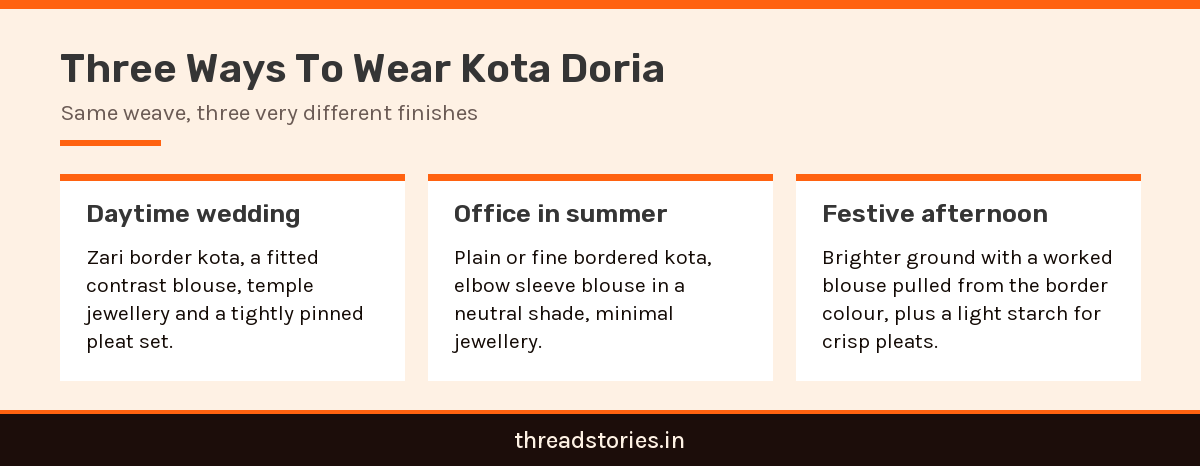
Summer weddings and daytime receptions are where it performs best. It holds a pleat through a long ceremony, it does not trap heat, and the faint silk sheen photographs well without looking showy. For anyone attending several daytime functions in a season, it is the most practical festive cotton available.
It also works well for office wear in hot months, particularly in plain or subtly bordered versions. The structure keeps it looking deliberate in a way that a featherlight mul drape does not always manage after a few hours at a desk.
Where it struggles is cold weather and formal evening events. The open weave that makes it comfortable in April makes it inadequate in December, and for an evening reception a denser handloom or a silk will simply look more appropriate.
Styling And Caring For Kota
Because the cloth is slightly sheer, the petticoat becomes part of the outfit rather than an afterthought. Match it closely to the saree or go one shade deeper. A contrasting petticoat will show through and flatten the effect of the weave entirely.
For the blouse, structure works well. The saree already has shape, so a fitted blouse in cotton or cotton silk complements it without adding bulk. Pulling the blouse colour from the border is the safest choice, and the ready to wear blouse options cover the common sizes if a tailor is not practical.
Washing needs care because of the silk content. Hand wash in cold water with a mild liquid detergent, never wring, and dry flat or along the length in shade. Harsh detergent strips the silk and leaves the cotton looking dull within a few washes.
Light starching is traditional with kota and genuinely helps. A weak rice starch tightens the khat and restores the crispness that makes pleats sit well. Avoid heavy commercial starch, which stiffens the fibres and makes the open weave brittle over time.
Colours, Borders And Buying Well
Kota takes colour differently from a dense cotton, and knowing this saves disappointment. Because the weave is open, any shade appears slightly lighter on the body than it does in a flat photograph. Deep colours soften and pale colours can look almost white in strong sun. If a precise shade matters, ask the seller for an image shot in daylight rather than under studio lighting.
The border does most of the work in deciding how formal the saree reads. A plain selvedge keeps it firmly everyday. A fine zari line lifts it to office appropriate. A broad woven border with zari moves the same base cloth into festive territory without adding real weight, which is the particular advantage of this weave.
Printed kota is worth understanding rather than dismissing. Hand block printing or tie dye applied to a genuine kota base is a legitimate craft and hides creasing well. What you want to avoid is a check printed onto a solid polyester cloth and sold as kota, which is a different product entirely.
When buying, look for the weaving cluster to be named and for the fibre split to be stated. A seller who says cotton and silk in specific proportions is describing real cloth. One who says only kota is describing a look. The team behind the collection can usually tell you exactly where a piece came from, and that traceability is the point of buying from a boutique rather than a marketplace.
Conclusion
A kota doria saree earns its place by solving a specific problem, which is looking finished in heat without sacrificing comfort. Learn to read the khat, buy from a seller who can name the weave, treat it as a daylight drape and wash it gently with respect for the silk content. Do that and it becomes the saree you rely on through every summer function. Browse the hand woven cotton range to compare kota against the other summer weaves before deciding.
Frequently Asked Questions
What is a kota doria saree made of?
A blend of cotton and silk yarn woven in alternating groups. The cotton provides breathability and softness, while the silk adds strength and a faint sheen to the cloth.
What is the khat in kota weaving?
Khat is the fine square check formed where cotton and silk yarn cross in both directions. It is the signature marker of a genuine kota weave rather than a print.
Is a kota doria saree transparent?
Slightly, because the weave is deliberately open. A well matched petticoat handles it completely, and the transparency is part of why the drape feels so light.
Can I wear kota doria to a wedding?
Yes, particularly a daytime wedding. Choose a version with a zari or woven border and pair it with a structured blouse for a properly festive finish.
How should I wash a kota doria saree?
Hand wash in cold water with mild liquid detergent, never wring, and dry in shade. The silk content makes harsh detergent and machine washing genuinely damaging.
Should kota doria be starched?
Light starching is traditional and helps the squares sit crisply. Use a weak rice starch. Heavy commercial starch stiffens the fibres and shortens the life of the weave.
How is kota different from mul cotton?
Kota is structured and holds a pleat because of its silk content. Mul is softer and falls straight but creases readily. Kota suits events, mul suits movement.
Is kota doria suitable for winter?
Not really. The open weave is designed for airflow in heat. For cooler months choose a denser handloom from the pure cotton collection instead.
Why is hand woven kota more expensive?
The yarn is fine and breaks under tension, so weaving is slow and demands skill. A single saree can take several days on the loom, and that time sets the price.
What blouse colour works with kota doria?
Pull the colour from the border for a coordinated finish, or choose a deeper contrast to make a pale ground stand out. See our guide to blouse styles for neckline advice.