

A mul cotton saree is the lightest drape most women will ever own, and that single quality changes everything about how it wears. It does not hold shape, it does not sit away from the body, and it creases if you look at it sideways. It is also the most comfortable thing you can wear in genuine heat. This guide explains what mul actually is, how it differs from mulmul, who it suits and how to keep it soft for years.
Key Takeaways
- Mul is a very fine, loosely woven cotton close to muslin. It prioritises breathability over structure, which is exactly why it feels so different from a standard cotton.
- Mulmul usually describes an even finer count of the same cloth. In most Indian shops the two words are used interchangeably.
- Creasing is a property, not a defect. Choose mul for days when you are moving, and choose a structured weave for days when you are being photographed.
What Mul Cotton Actually Is
Mul is a plain woven cotton made from fine yarn with a relatively open structure. The gaps between threads are what let air move, and that airflow is the whole point. The cloth sits in the same family as muslin, which India wove and exported for centuries before industrial spinning arrived.
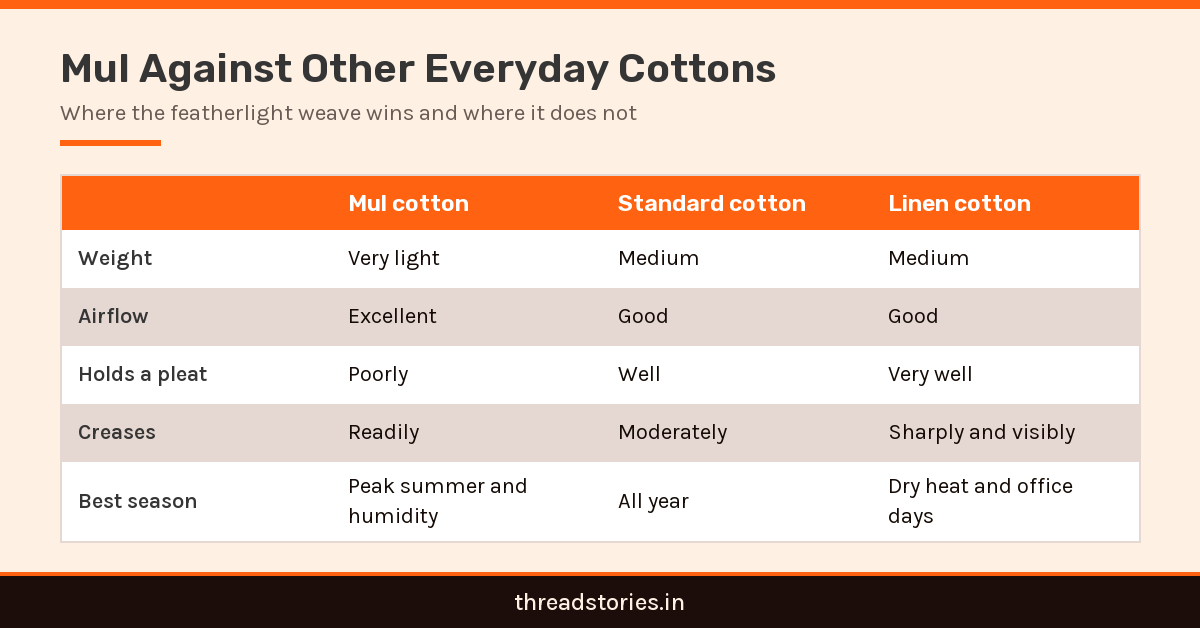
Because the yarn is fine, the finished drape weighs very little. Hold a mul saree and a standard cotton saree together and the difference is immediate. That lightness is why mul falls straight down the body rather than standing away from it, and why the pleats stay narrow instead of fanning out.
The trade off is structure. Mul will not give you a sculpted silhouette and it will not hold a sharp pleat through a long evening. What it gives instead is the sensation of wearing almost nothing, which in an Indian summer is worth more than structure. The hand woven mul collection shows how much variation exists even inside this one weave.
The weaving history matters here more than it usually does. Fine cotton of this kind was a Bengal speciality, produced for a climate that is hot and wet for most of the year. The weave was solving a specific problem, which was how to stay covered without trapping heat against damp skin. Understanding that origin explains why mul behaves the way it does and why it feels wrong in a cold, dry room.
It also explains the price range. Finer yarn takes longer to spin and is harder to weave without breakage, so a genuinely fine hand woven mul costs more than a heavier cotton of the same size. When a listing offers very fine cotton at a very low price, the yarn is usually mill spun and the weave machine made, and the difference shows up in how the cloth ages rather than on the first wearing.
Mul Or Mulmul, And Does It Matter
In practice, very little. Mulmul is the doubled form of the word and in most Indian shops it simply indicates a softer, finer version of the same cloth. Some weavers use mulmul for higher thread counts specifically, but there is no enforced standard, so the label alone will not tell you much.
What does tell you something is the hand feel. Rub the fabric between thumb and finger. A finer mulmul feels almost powdery and drapes with no resistance at all. A standard mul has slightly more body and a faint texture. Both are correct, and the finer one is not automatically better, because very fine cloth is also more delicate.
When mul is combined with surface work the character changes again. Kantha stitching adds weight and texture to an otherwise weightless cloth, which is why the mul mul kantha pieces read as dressier than plain mul while keeping most of the comfort.
There is a practical reason to care about the distinction anyway. A finer count needs gentler handling, so if you are buying your first piece and expect to wash it weekly, a standard mul is the more forgiving choice. Save the very fine mulmul for occasions where it will be worn a few times a season rather than put through constant laundry.
Who Mul Suits Best
Mul flatters anyone who wants a drape that follows the body rather than adding volume. Because it falls straight, it does not build bulk at the waist the way a stiffer cotton can. For taller frames it reads long and fluid. For smaller frames it avoids the swamping effect that heavy fabric sometimes creates.
It suits certain days more than certain bodies, which is the more useful way to think about it. Commutes, work from home afternoons, temple visits, school runs and long humid days are all mul territory. Sitting through a four hour reception in photographs is not, simply because the creases will show.
A structured blouse is the fix for almost every mul styling problem. Where the saree gives no shape, the blouse supplies it, and a fitted or lightly padded option changes the whole silhouette. The ready to wear blouse range covers the standard sizes if you would rather not wait on a tailor.
Colour choice does some of the same work. Plain pale mul shows every crease and every shadow, while a printed, tie dyed or textured surface hides both. If creasing is the thing holding you back from the weave, a print is the simplest solution available and costs nothing extra.
Pleating technique helps too. Mul takes narrow pleats better than wide ones, because narrow pleats have less fabric to collapse. Pin the pleats at the waist rather than relying on the petticoat cord alone, and the drape holds its line for far longer through a day of sitting and standing.
Keeping A Mul Saree Soft For Years
Mul improves with washing more visibly than any other cotton, provided the washing is gentle. The fine yarn is the thing you are protecting, so everything in the routine should reduce stress on it.
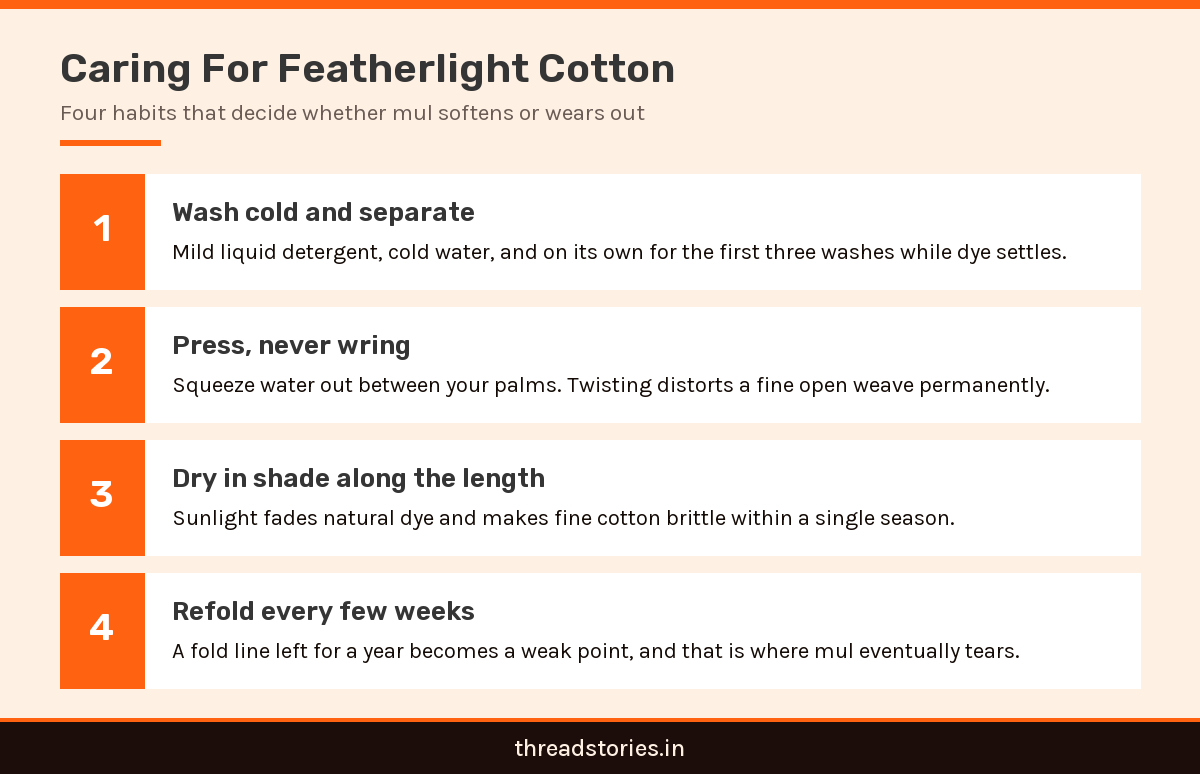
Wash by hand in cold water with a mild liquid detergent, separately for the first three washes while surplus dye releases. Never wring. Press the water out between your palms, then dry flat or hang along the length in shade. Direct sun is the fastest way to weaken fine cotton and fade a natural dye.
Iron on a medium setting while the cloth is still slightly damp, working along the grain. Store folded loosely rather than tightly, and change the fold line every month or two. A mul saree that is refolded regularly will outlast one that sat untouched in the same crease for a year.
Avoid the washing machine entirely, including the gentle cycle. The problem is not the water, it is the agitation and the spin, both of which pull at an open weave from several directions at once. Fine cotton that has been machine washed a few times develops a slightly fuzzy surface and loses the crispness that makes the drape hang cleanly.
Keep mul away from wooden shelves without a cotton lining. Untreated wood releases acidity over time and leaves brown spotting on fine cotton, which is almost impossible to remove once it appears. A plain cotton cloth between the shelf and the saree prevents it entirely and costs nothing.
Skip the plastic cover as well. Fine cotton needs to breathe in storage, and sealed plastic traps humidity against the cloth, which encourages mildew in any damp climate. A soft muslin bag or a clean cotton pillowcase protects the saree from dust while still letting air pass through it.
Conclusion
A mul cotton saree is a specialist rather than an all rounder, and knowing that makes it easy to love. Choose it for heat, for movement and for days when comfort matters more than a sharp silhouette. Pair it with a structured blouse, wash it gently, refold it often and it will soften into the piece you reach for without thinking. Browse the cotton saree edit to compare the featherlight weaves against the sturdier ones before you choose.
Frequently Asked Questions
Is a mul cotton saree good for daily wear?
Yes, particularly in warm weather. It is light, breathable and washes easily at home. The only limitation is creasing, so it suits active days better than long seated events.
What is the difference between mul and mulmul?
Very little in practice. Mulmul usually indicates a finer, softer count of the same cloth, but there is no enforced standard, so judge by hand feel rather than the label.
Does mul cotton become transparent?
Lighter shades can be slightly sheer because the weave is open. A matching cotton petticoat solves it completely and is standard practice with fine cotton drapes.
How do I stop a mul saree from creasing so much?
You cannot eliminate it, as creasing is inherent to the weave. Light starching helps, and choosing printed or textured mul over plain makes creases far less visible.
Can I wear mul cotton to a wedding?
For daytime functions, yes, ideally with kantha work or a woven border. For evening receptions choose a jamdani or heavier handloom instead.
Does mul cotton shrink?
Slightly, in the first wash. Use cold water and dry in shade to limit it. The weave stabilises after two or three washes and stays consistent afterwards.
Which blouse suits a mul cotton saree?
A structured or lightly padded blouse works best, because it supplies the shape the fabric does not. Cotton or cotton silk keeps the whole outfit breathable.
How long does a mul saree last?
Many years with gentle care. Fine yarn is delicate but not fragile. Hand washing, shade drying and regular refolding matter far more than how often you wear it.
Is mul cotton warm enough for winter?
Not on its own. It is designed for airflow. Layer with a full sleeve blouse and a shawl, or move to a denser weave from the pure cotton range.
Why does my new mul saree feel slightly stiff?
New handloom often carries sizing from the weaving process. It washes out. The cloth reaches its real softness somewhere around the third or fourth wash.