
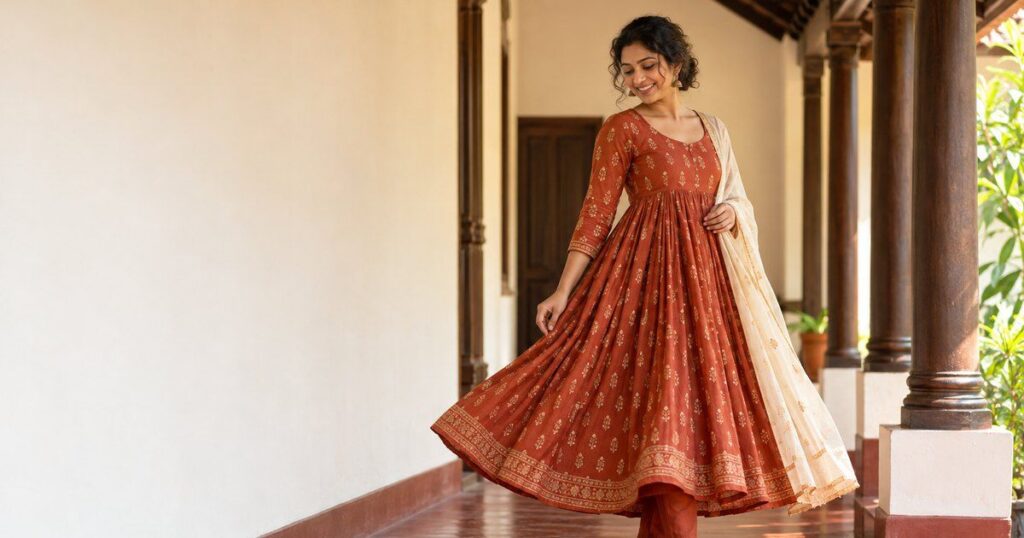
An anarkali kurta set is the most flattering silhouette in Indian ethnic wear and the easiest one to get wrong. Everything depends on where the flare begins, how much fabric it carries, and what you wear underneath it. This guide covers how the anarkali differs from a kurta palazzo set, which proportions suit which frame, and how to choose between the two without guessing.
Key Takeaways
- The flare point decides everything. A flare starting under the bust reads traditional, while one starting at the waist reads contemporary and is easier to wear.
- An anarkali needs a narrow bottom. A kurta palazzo set works on the opposite principle, pairing a straighter top with volume below.
- Length changes the silhouette more than flare volume does. Floor length reads formal, calf length reads versatile.
What Makes An Anarkali An Anarkali
The anarkali is defined by a fitted upper section that releases into a flare. The fit through the bust and the volume below are the two halves of the silhouette, and the relationship between them is what creates the shape.
The flare is created with panels or gores rather than gathering, which is why a well made anarkali falls in smooth vertical folds instead of bunching at the seam. More panels produce a fuller, rounder sweep, and they also make the garment more expensive to cut and stitch.
The style takes its name from a figure in Mughal legend, and the silhouette has been part of North Indian dress for a long time. It sits within the broader salwar kameez family while looking quite different from the straight kameez most people picture.
What makes it flattering is proportion. The fitted section draws the eye to the narrowest part of the torso, and the flare below creates an unbroken vertical line. That combination adds apparent height, which is why it works so consistently across body shapes.
What makes it difficult is volume. An anarkali carries several metres of fabric, so it is warm, it needs space to move, and it can overwhelm a smaller frame if the flare is too full or starts too high.
Panel count is the specification worth asking about, and very few listings mention it. A garment cut from four or six panels gives a modest, structured sweep. Ten or twelve panels produce the dramatic circular flare seen at weddings. More panels also mean more seams, which is part of why two anarkalis in the same fabric can differ so much in price.
The neckline does quiet work here too. Because the eye is already travelling down a long vertical line, a deep or open neckline extends that line further, while a high closed neck shortens it. On a shorter frame, choosing a V or a keyhole neck can do as much for the proportion as changing the flare point would.
Where The Flare Should Start
This single decision changes the character of the garment more than colour, fabric or embroidery does.
A flare beginning just under the bust is the classic proportion. It creates the longest possible vertical line and reads most traditional and most formal. It also creates the most volume, which suits taller frames and festive occasions rather than everyday wear.
A flare beginning at the natural waist is the more contemporary choice. It defines the waist visibly, uses less fabric, and is considerably easier to sit and move in. For most people buying their first anarkali, this is the safer proportion.
A flare beginning at the hip produces something closer to an A line kurta than a true anarkali. It is the most wearable of the three for daily use, though it loses much of the drama that makes the silhouette distinctive.
Height interacts with all of this. Shorter frames generally do better with a waist level flare and a calf length hem, because an under bust flare in floor length can read as overwhelming. Taller frames can carry the full traditional proportion comfortably.

Anarkali Or Kurta Palazzo Set
These two silhouettes solve opposite problems, and choosing between them is easier once you see them that way.
The anarkali puts volume on top and keeps the bottom narrow. A fitted churidar or a slim pant is essential, because volume on both halves removes the shape entirely. The result is dramatic, formal and best suited to occasions.
The kurta palazzo set inverts this. A straight or short kurta sits above wide legged palazzo trousers, so the volume lives below the waist. The effect is relaxed, contemporary and far more practical for a working day or travel.
Comfort separates them clearly. Palazzos allow free movement, sit comfortably through long periods of sitting, and handle heat well because air moves through them. An anarkali restricts stride and carries more fabric against the body.
If you are buying one of each, make the anarkali the occasion piece and the palazzo set the everyday one. That division covers the widest range of situations, and the ready to wear kurta range is built mostly around the second category for that reason.
Fabric, Lining And Getting The Fit Right
Fabric choice decides whether an anarkali falls or floats, and the two effects are very different.
Cotton and cotton blends hold structure, which gives a defined, sculptural flare. This suits daytime events and anyone who wants the shape to hold rather than move. It is also the most comfortable option in genuine heat.
Georgette, chiffon and lighter silks fall rather than hold, producing a fluid sweep that moves as you walk. These read more formal and photograph beautifully, but they need lining and they breathe less well.
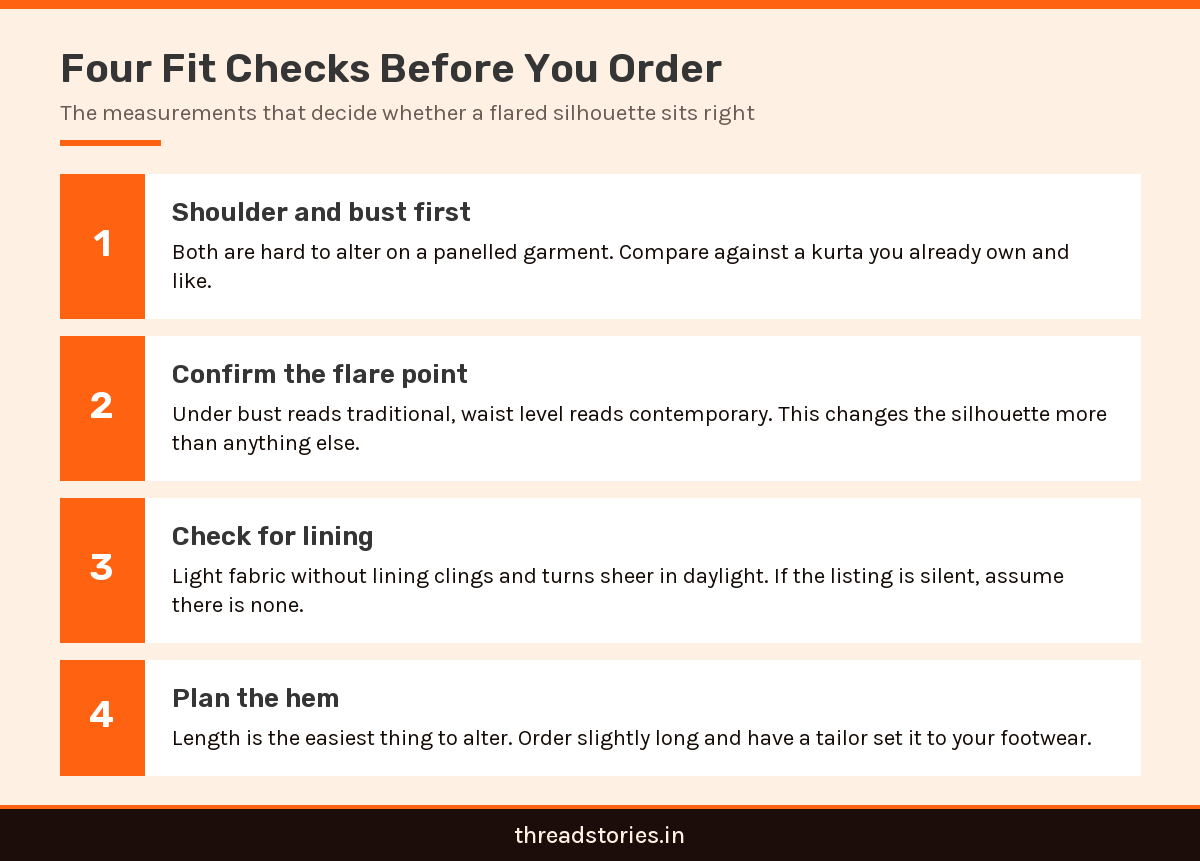
Lining is not optional on a flared garment. Without it, a light fabric clings and becomes transparent in daylight, and the flare collapses instead of standing away. Check whether lining is mentioned, and if the listing is silent, assume there is none.
On fit, the fitted section is what matters. Shoulder width and bust must be right, because both are difficult to alter on a panelled garment. Length is straightforward to shorten, and a hem taken up by a tailor is a small cost against a silhouette that otherwise sits wrong.
If you prefer control over the whole silhouette, unstitched kurta material lets you specify flare point, panel count and length rather than accepting a standard cut.
Styling For Weddings, Festivals And Everyday
The anarkali carries occasion dressing more easily than almost anything else, which is why it dominates wedding season wardrobes.
For weddings and receptions, choose a fuller flare in a fabric with some sheen, pair it with a fitted churidar and keep the dupatta long. Jewellery can be substantial here, because the silhouette has enough presence to balance it.
For festivals and family functions, a cotton or cotton silk anarkali at calf length is the more practical choice. It photographs well, it survives a long day and it does not demand constant management the way a floor length version does.
For everyday wear, look at the hip level flare or move to a kurta palazzo set instead. A relaxed silhouette in printed cotton reads as ethnic without reading as occasion wear, which is the balance most working wardrobes actually need.
Footwear finishes the proportion and is frequently overlooked. A floor length anarkali needs a heel or a raised sole to keep the hem off the ground, while a calf length version works with flats. Buy the garment and the footwear together where possible, or have the hem set after you have chosen the shoes.
For a coordinated festive look without assembling pieces yourself, the skirt set range offers a similar volume in a different construction, which some people find easier to wear.
Conclusion
An anarkali kurta set works when the proportions are deliberate. Decide where the flare should begin, keep the bottom narrow, insist on lining in lighter fabrics, and get the shoulder and bust right before worrying about anything else. Choose a palazzo pairing instead when comfort and daily wear matter more than drama. Browse the ThreadStories ethnic wear collection to compare flare points and lengths before deciding which silhouette suits you.
Frequently Asked Questions
What is the difference between an anarkali and a kurta palazzo set?
An anarkali puts volume on top with a narrow bottom. A kurta palazzo set does the opposite, pairing a straighter top with wide legged trousers below.
Which body shape suits an anarkali kurta set?
Most shapes, because the fitted bodice and vertical flare add apparent height. Shorter frames do best with a waist level flare and a calf length hem.
Where should the flare start on an anarkali?
Under the bust reads traditional and formal. At the natural waist reads contemporary and is easier to move in. At the hip becomes closer to an A line kurta.
Do anarkali kurtas need lining?
Yes, particularly in georgette, chiffon or light cotton. Without lining the fabric clings, turns sheer in daylight and the flare collapses instead of standing away.
What should I wear under an anarkali?
A fitted churidar or a slim straight pant. Volume on both halves removes the silhouette entirely, which is the most common styling mistake with this shape.
Can I wear an anarkali every day?
A hip level flare in cotton works for daily wear. Full traditional proportions carry too much fabric to be comfortable through a normal working day.
Is cotton suitable for an anarkali?
Yes, and it gives a defined sculptural flare rather than a fluid one. Cotton is the most comfortable choice for daytime functions and warmer weather.
How long should an anarkali be?
Floor length reads most formal and needs a heel to keep the hem clear. Calf length is far more versatile and works comfortably with flat footwear.
What jewellery works with an anarkali kurta set?
Statement earrings and minimal neckwear usually work best, since the neckline is often detailed. Pair with traditional footwear such as jhoothis to complete the look.
How do I store a flared anarkali?
Hang it rather than folding, so the panels keep their shape. Use a padded hanger and give it room, since compression sets creases into the flare seams.