
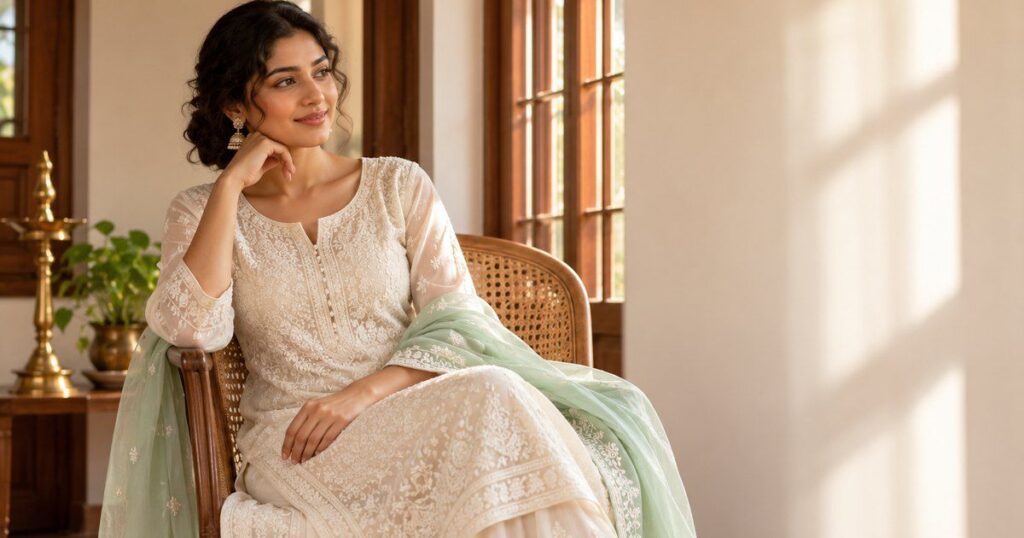
A chikankari kurta set is one of very few garments that reads as festive while staying completely comfortable. That combination comes from the craft itself, which builds texture into light cloth rather than weighing it down. This guide covers the stitches that make up the work, how to judge quality honestly, which fabrics carry the embroidery best, and how to wash it so the thread survives.
Key Takeaways
- Chikankari is a family of stitches rather than one technique. The number and type used is the clearest measure of quality.
- The fabric underneath matters as much as the thread on top. Fine cotton, mul and georgette each change how the work sits.
- Density is not the same as quality. A sparse piece worked in varied stitches can be finer than a densely covered machine copy.
The Stitches That Make The Craft
Chikankari is not a single stitch. Traditional practice recognises dozens, though a working artisan will use a handful regularly, and the mix is what gives a piece its character.
The flat stitches sit level with the cloth and create outlines and filled shapes. These are the most common and the quickest to work, which is why a simple everyday piece is usually built mostly from them.
The raised stitches sit above the surface and create the small knots and grains that give good chikan work its texture. They take longer and demand more skill, so their presence is a reliable sign that real hands were involved.
The open or net like stitches are the most technically demanding. Threads of the base fabric are drawn apart to create a mesh effect, producing a fine lace like area that no machine reproduces convincingly. A piece containing this work sits at the top of the range.
When you compare two garments, count stitch types rather than surface coverage. A piece using flat, raised and open stitches together is finer than one covered entirely in a single repeated flat stitch, even if the second looks busier at a distance.
The process behind the work explains why this variation exists. A design is first block printed onto the cloth in washable ink, then passed to embroiderers who each specialise in particular stitches. A single garment can therefore travel between several artisans before it is finished, and the final wash removes the printed guide lines entirely.
That division of labour is also why quality varies so much within genuine hand work. A piece that passed through one generalist will show fewer stitch types than one that moved between specialists, and the second will cost more for good reason. Neither is fake, but they are not the same product, and the difference is visible once you know to look for it.
Judging Quality Honestly
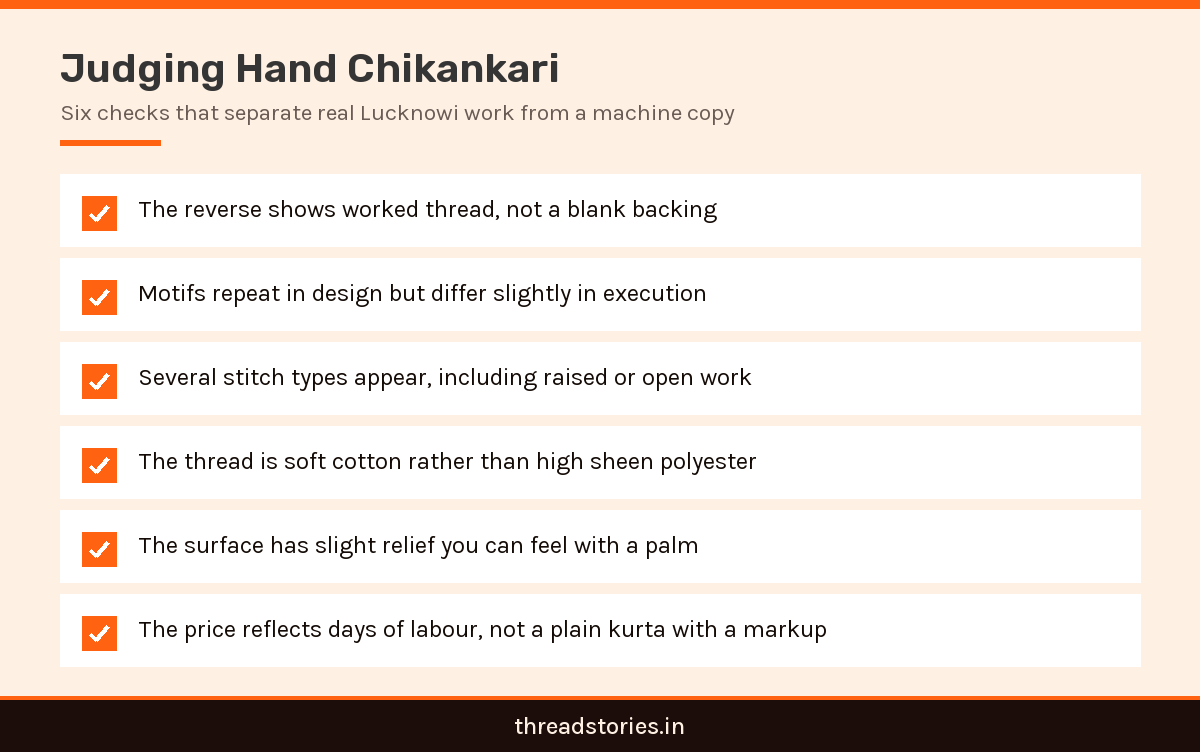
Start with the reverse. Hand work shows thread paths, small knots and a visible working side. The neatness of that reverse tells you about the artisan, and a tidy back with no loose ends is the mark of experienced work.
Look at the motif repetition next. Two flowers on a hand worked kurta will be recognisably the same design and visibly different in execution. Identical repetition across a garment means machine embroidery, however fine it looks.
Check the thread itself. Traditional chikankari uses soft cotton thread that sits into the cloth. A high sheen polyester thread reads differently, catches light unnaturally and is a common shortcut in mass produced pieces.
Consider the time honestly when you compare prices. Dense hand embroidery on a full kurta represents days of work by a skilled artisan. When a listing offers heavy hand work at the price of a plain cotton kurta, the arithmetic does not hold. The chikankari long kurta range is priced against the work rather than against a target discount.
Finally, ignore density as a proxy for value. Sparse, well placed work on good cloth is a deliberate design choice and often more wearable than full coverage, particularly for anything you intend to wear to an office.
Which Fabrics Carry The Work Best
The base cloth changes the character of the embroidery completely, and this is where personal preference matters more than any rule.
Fine cotton and mul are the traditional grounds. They are light, they breathe, and the white thread on white cloth produces the shadow effect the craft is known for. This combination is the most comfortable in heat and the most classic in appearance.
Cotton silk and chanderi add a faint sheen that lifts the same embroidery towards occasion wear. The work reads slightly more formal, and the fabric holds a better line for a structured silhouette.
Georgette and lighter synthetics carry chikankari in a more fluid, draped way. They suit anarkali shapes and evening events, though they lose the breathability that makes cotton chikankari so wearable through an Indian summer.
For a first purchase, fine cotton is the sensible choice. It shows the stitch quality most clearly, it is the most versatile across occasions, and it is the version the craft was designed around. Pair it with matching chikankari palazzos for a complete set, or keep the bottom plain to let the work speak.
Styling A Chikankari Set Across Occasions
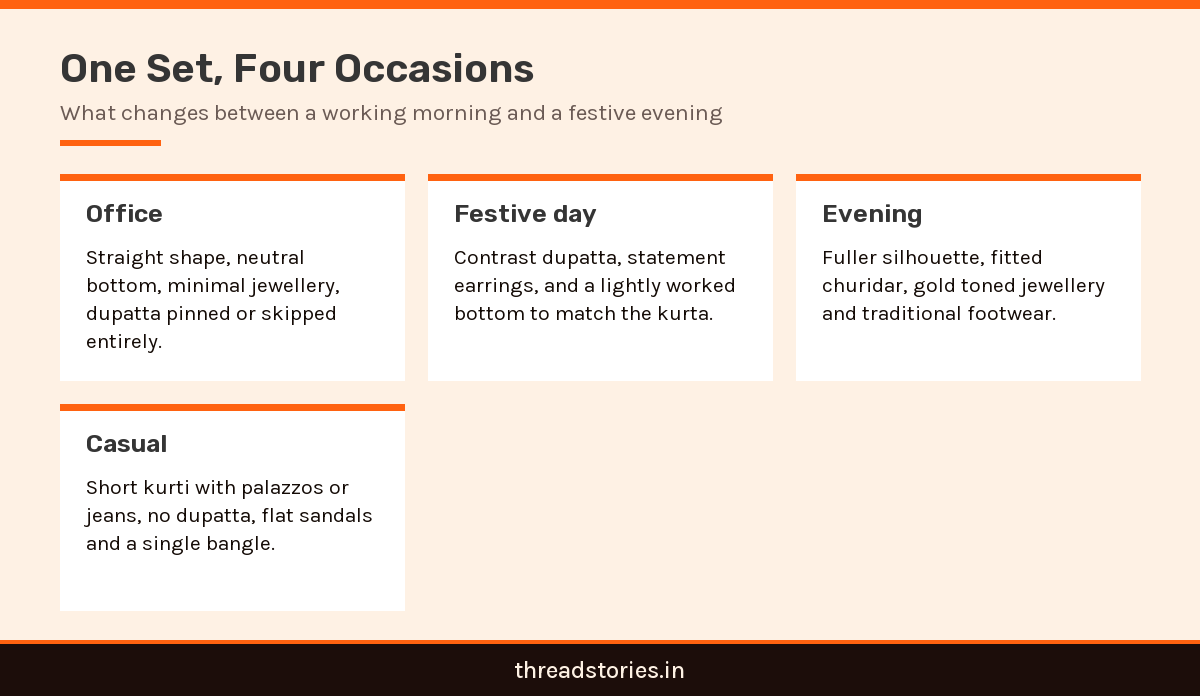
The great advantage of this craft is range. The same set can read office appropriate in the morning and festive by evening with very little intervention.
For work, keep everything quiet. Straight silhouette, plain bottom in a neutral, minimal jewellery and flat footwear. Skip the dupatta or pin it neatly at the shoulder. The embroidery supplies all the interest the outfit needs.
For festive daytime, add a contrast dupatta and statement earrings. A pastel or coloured dupatta against white chikankari is one of the most reliable combinations in Indian dressing, and it costs nothing if you already own the pieces separately.
For evening events, move to a fuller silhouette and add traditional footwear such as jhoothis. Gold toned jewellery works particularly well against white thread, and a fitted churidar keeps the line clean under a flared kurta.
For casual days, a shorter chikankari kurti with palazzos or even jeans works surprisingly well. The craft does not have to be formal, and the short kurti options are designed for exactly this kind of relaxed wear.
Washing And Storing Hand Embroidery
Chikankari fails at the thread before it fails at the cloth, so every care decision should protect the embroidery rather than the fabric.
Hand wash in cold water with a mild liquid detergent. Machine agitation pulls at raised and open stitches from several directions at once, and the damage shows first at the densest area, usually around the neckline.
Do not wring or scrub. Press water out gently between the palms. For any mark, treat the spot rather than rubbing the whole garment, since friction across embroidery loosens knots that are holding the design together.
Dry in shade, laid flat if possible. Hanging a wet chikankari kurta stretches the shoulders and pulls the work out of shape, and white thread yellows faster in direct sunlight than most people expect.
Store folded with the embroidery facing inward, ideally with a soft cloth between the layers. Avoid plastic, which traps moisture against cotton thread. If you wear the piece rarely, take it out every few months and refold it along a different line.
Ironing needs a little care as well. Turn the garment inside out and press from the reverse on a medium setting, so the iron never sits directly on raised stitches. Pressing the right side flattens the texture that the work was created for, and once that relief is gone it does not come back.
Small repairs are worth doing early. If a thread pulls loose, secure it rather than trimming it, because cutting releases the tension holding neighbouring stitches. Most tailors who work with embroidery can reattach a loose section in minutes, and catching it at that stage prevents a whole motif unravelling over a few washes.
Conclusion
A chikankari kurta set rewards a buyer who knows what to look for. Count the stitch types rather than the coverage, check the reverse and the repetition, choose fine cotton if you want the craft at its most classic, and wash by hand in cold water to protect the thread. Styled simply it works for an office, and with a contrast dupatta it carries a festive evening. Explore the ThreadStories chikankari collection to compare stitch quality across pieces before you choose.
Frequently Asked Questions
What is a chikankari kurta set?
A kurta with traditional Lucknowi hand embroidery, usually sold with a matching or coordinated bottom. The work is stitched by hand rather than printed or woven into the cloth.
How do I know if chikankari is hand done?
Check the reverse for worked thread and look for slight variation between repeated motifs. Hand embroidery also has surface relief you can feel with your palm.
Which fabric is best for chikankari?
Fine cotton or mul shows the stitch quality most clearly and stays comfortable in heat. Cotton silk and georgette suit occasion wear but breathe less well.
Can I wear a chikankari kurta set to the office?
Yes. Choose a straight silhouette with lighter work, pair it with a plain neutral bottom and keep jewellery minimal. The embroidery provides enough interest on its own.
How should I wash chikankari?
Hand wash in cold water with mild liquid detergent, press rather than wring, and dry flat in shade. Machine washing pulls at the raised and open stitches.
Does white chikankari turn yellow?
It can, mostly from sunlight and from storing in plastic. Dry in shade, store folded in a cotton cloth and the white stays true for many years.
Is dense chikankari always better quality?
No. Stitch variety matters more than coverage. A sparse piece using raised and open stitches is finer work than dense coverage in one repeated flat stitch.
Why is hand chikankari expensive?
A fully worked kurta represents days of skilled labour, often by artisans working from home around Lucknow. The price reflects that time rather than the fabric cost.
What bottom goes with a chikankari kurta?
Plain palazzos or straight pants in a neutral shade work best for everyday wear. See the unstitched kurta and pant sets if you prefer coordinating the fabric yourself.
Can chikankari be worn in winter?
Yes, with layering. A shrug or long jacket over a chikankari kurta keeps the embroidery visible while adding warmth, and works better than heavier ethnic fabrics.